


United Airlines (UAL) was hit by higher fuel costs in Q1, but there are clear reasons for bulls to hold firm as the pressure appears cyclical rather than structural. Demand remained resilient, and unit revenues continue to outpace costs, indicating that pricing power is still intact even as fuel expenses rise. With improving margins and an actively deleveraging balance sheet, United is positioned to absorb this near-term shock without derailing the broader trajectory, making the case for my bullish long-term view on the stock.
Meet Samuel – Your Personal Investing Prophet
- Start a conversation with TipRanks’ trusted, data-backed investment intelligence
- Ask Samuel about stocks, your portfolio, or the market and get instant, personalized insights in seconds

Stress Testing the Worst Case and Sticking to the Plan
Before Q1 results, amid escalating Middle East conflicts that pushed oil prices above $100 per barrel, United Airlines had already been signaling the need for what can be described as an “operational hedge.” The tone in the memo to employees written by CEO Scott Kirby leaned toward stressing a worst-case scenario. It was explicitly stated that fuel prices more than doubling in a short period of time could imply up to $11 billion in additional annual fuel costs for the airline. This assumes oil at $175 per barrel, with prices remaining elevated through 2027.
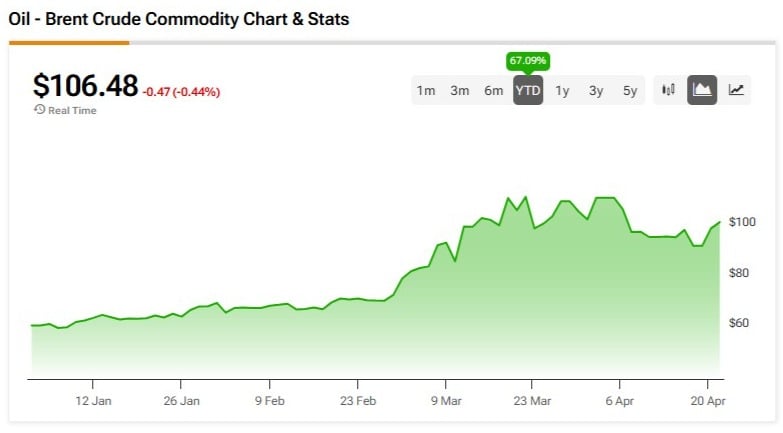
The tactical response would begin with a roughly 5 percentage-point cut in capacity. The focus would be on off-peak flying and specific routes. However, while the company talked as if oil at $175 was around the corner, some of the actions did not reflect this. Despite the more alarmist tone, United maintained its plan for over 120 aircraft by 2026 and roughly 250 by 2028, reinforcing that its long-term growth strategy remains intact.
That being said, higher fuel costs forced the company to offer a much wider range of earnings guidance. The previously expected $12–$14 adjusted earnings per share (EPS) for the full year was reframed under a higher fuel scenario to $7–$11, a roughly 10% year-over-year decline at the midpoint.
Demand had been resilient heading into the shock and appears to be holding up so far, as reflected in the Total Revenue per Available Seat Mile (TRASM), growing 6.9% year-over-year in Q1 and 1.8% sequentially. Still, that’s not enough to fully offset the margin pressure caused by fuel prices more than doubling in a short period of time, even with gradual pass-through.
United’s Unit Economics Are Still Holding Up
Now, looking at the near term, Q2 guidance points to adjusted EPS between $1 and $2, assuming fuel at about $4.30 per gallon. That looks like a reasonable scenario of short-term margin pressure.
Since many Q2 tickets were already sold at lower fuel prices, United expects to pass through only 40%–50% of fuel costs in the quarter. However, this improves to 70%–80% in Q3 and 85%–100% in Q4. In other words, pricing power should strengthen as the year progresses. It’s not that costs can’t be passed through — it just takes time. Capacity guidance remaining flat at 2% year-over-year in Q3 and Q4 further reinforces this discipline, with no signs of aggressive growth in a high-fuel environment.
Perhaps the most concerning point in Q1 was Cost per Available Seat Mile excluding fuel (CASM-ex), which rose roughly 6% after being flat in the previous two quarters. This does suggest that operational execution is still somewhat under pressure.
More importantly, Passenger Revenue per Available Seat Mile (PRASM) grew 7.4% year-over-year in Q1 — a clear proxy for firm demand and healthy pricing, and outpaced CASM-ex. This indicates that unit economics are still holding up well, with each seat generating more value than it costs, even amid cost pressures.
A Safer Way to Play Airlines
United generated $9.5 billion in cash from operations over the past 12 months, including $8.4 billion in 2025, up from $6 billion in 2022, and close to the $9.4 billion peak attained in 2024. This has allowed the company to consistently reduce its debt load in recent years. As a result, United’s debt-to-assets ratio fell from about 54% to 35% over the past 12 months. This places it between Delta Air Lines (DAL) and Southwest Airlines (LUV), with ratios of roughly 17% and 21%, respectively, and well below American Airlines’ (AAL) 58%.

Margins are improving, with adjusted operating margin at 4.2%, up 0.4 points year-over-year, while the balance sheet continues to strengthen. That leaves United well positioned for a mid-cycle environment, with resilient, though not accelerating, consumer spending and a labor market that keeps inflation relatively contained.
For this reason, I believe United is likely to remain among the airline stocks that outperform their peers. Not necessarily because it offers the most asymmetric upside, but because it carries lower perceived risk. In a sector as volatile as the airline industry, downturns tend to hit players operating closer to breakeven and with higher leverage much harder. As shown in the chart below, both UAL and DAL have clearly outperformed their peers over the past five years.

To top it off, even with EPS likely to take a hit in FY26, UAL’s 10.2x forward earnings multiple still looks quite compelling. Especially when compared to the near 12.7x at which both Delta and Southwest are currently trading, despite arguably having the least leveraged balance sheets in the sector.
Is UAL a Buy, According to Wall Street Analysts?
The consensus among Wall Street analysts on UAL shares is a Strong Buy, with all 15 analysts who have issued price targets over the past three months recommending a Buy. Even after some downward revisions following the Q2 guidance, the average price target of $127.59 still implies roughly 39.83% upside from the current share price.

Volatility in the Short Term, Upside over Time
The outlook for United Airlines remains highly volatile, especially in the short term, largely depending on where fuel prices head in the coming weeks and months. Yet it still seems to me that the company continues to benefit from resilient demand and is executing a contingency strategy to preserve margins as much as possible.
Looking further out, I believe UAL is likely to outperform relative to its peer group. A more resilient balance sheet and margin profile should help it better weather periods of turbulence, such as the current spike in fuel costs.
As a result, I maintain a constructive long-term view on the shares, with valuation still appearing relatively undemanding.