Tech giant Apple (AAPL) is becoming one of the more interesting AI stories because the 2026 chip war may be decided before an iPhone Supercycle even begins. Indeed, Apple reportedly secured more than half of TSMC’s (TSM) initial 2nm chip capacity. While many investors are focused on software, Siri, and Apple’s AI monetization, the real advantage may lie much earlier in the supply chain. With priority access to the most advanced silicon, Apple could widen its lead over rivals and make its supply chain dominance even more important during the current chip shortage.
Claim 55% Off TipRanks
- Unlock hedge fund-level data and powerful investing tools for smarter, sharper decisions
- Discover top-performing stock ideas and upgrade to a portfolio of market leaders with Smart Investor Picks
Apple’s 2nm Advantage Could Power an iPhone Supercycle
Apple’s 2nm advantage could power an iPhone Supercycle because better chips can make the actual user experience noticeably better. The move to TSMC 2nm chip technology is expected to bring a major improvement in power efficiency, which could help products offer better battery life, faster performance, and more advanced on-device AI features. That is important because consumers usually do not upgrade just because a company says “AI.” They upgrade when the phone feels faster, lasts longer, and can do things their older device cannot.
This is where Apple’s strategy starts to look different from many other AI companies. Instead of relying only on cloud AI or standalone chatbots, Apple can use its hardware to monetize Apple AI through the ecosystem it already controls. If users buy new iPhones for stronger AI features, Apple benefits from the device sales first.
Then, over time, those same users can generate high-margin revenue through the App Store, iCloud, subscriptions, payments, and other services. That matters because Apple’s Services gross margin has been reported at 76.7%, which shows how profitable the ecosystem can become once users are locked in.
Samsung and Qualcomm May Have to Fight for the Remaining Supply
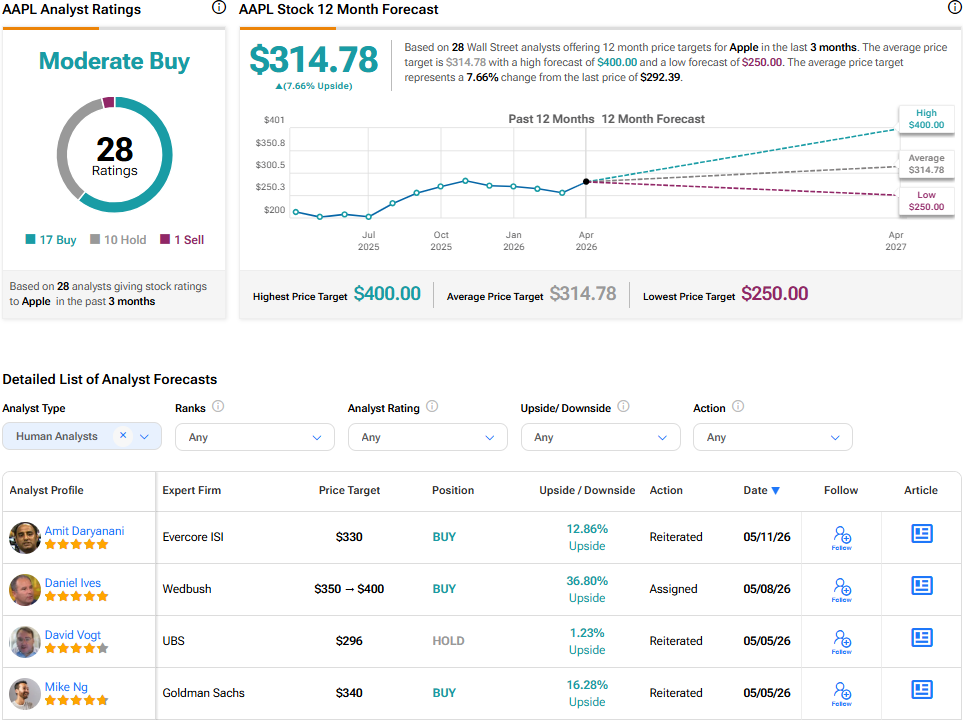
In addition, with priority access to TSMC’s best 2nm silicon, companies like Samsung (SSNLF) and Qualcomm (QCOM) may have to fight for the remaining supply. That will undoubtedly impact the Apple vs. Samsung market share battle, especially if iPhone demand improves while competitors face chip constraints. As a result, analysts at Wedbush, led by five-star analyst Daniel Ives, have recently lifted their AAPL price target to a Street-high of $400, thanks to the inevitable demand for the iPhone and the firm’s first-mover advantage in 2nm tech. In fact, Ives believes that demand will exceed expectations by 10-15%.
Is Apple a Buy or Sell Right Now?
Turning to Wall Street, analysts have a Moderate Buy consensus rating on AAPL stock based on 17 Buys, 10 Holds, and one Sell assigned in the past three months, as indicated by the graphic below. Furthermore, the average AAPL price target of $314.78 per share implies 7.7% upside potential.