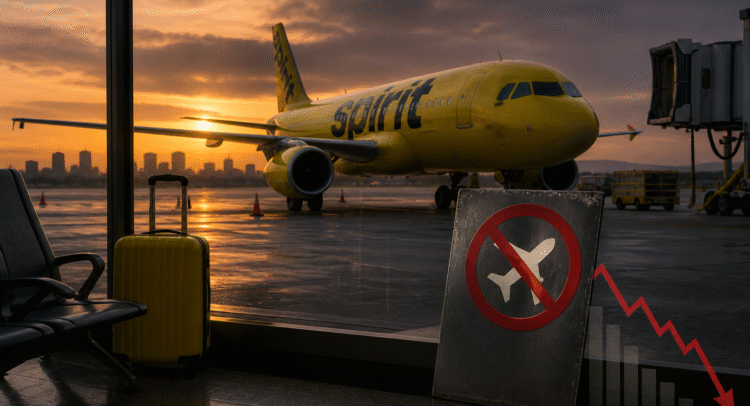
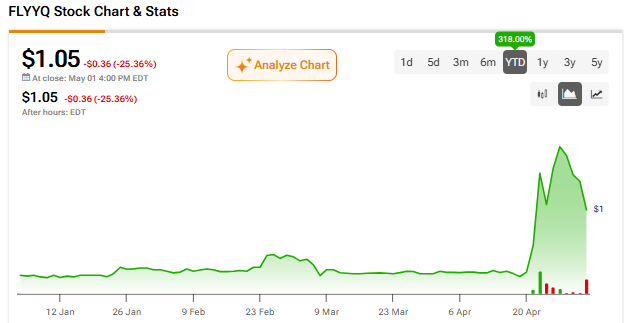
Spirit Airlines (FLYYQ) has shut down all operations after failing to secure a last-minute $500 million bailout deal. The low-cost carrier canceled all flights and began a full wind-down, ending more than three decades of service in the U.S. market.
Meet Samuel – Your Personal Investing Prophet
- Start a conversation with TipRanks’ trusted, data-backed investment intelligence
- Ask Samuel about stocks, your portfolio, or the market and get instant, personalized insights in seconds
The company confirmed the move in a notice to customers, stating, “We regret to inform you that all Spirit Airlines flights have been canceled, effective immediately.” The shutdown affects about 17,000 jobs and leaves many travelers seeking alternatives.
The airline had been in talks with bondholders and the Trump administration, but the sides could not agree on terms. Spirit had already filed for bankruptcy twice since late 2024 and faced rising pressure from higher costs and weaker demand for no-frills travel.
Rising Costs and Shifting Demand Weighed on Spirit
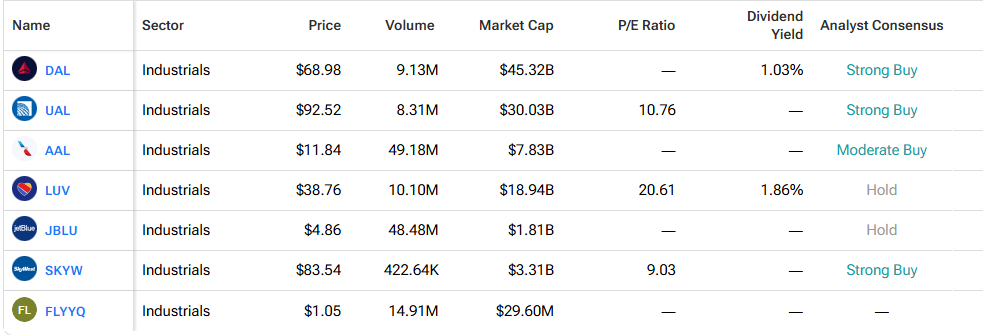
To start, Spirit built its brand on ultra-low fares with extra fees for most services. However, that model became harder to sustain. Larger airlines such as United Airlines (UAL), American Airlines (AAL), and Southwest Airlines (LUV) began offering basic economy options with greater comfort and broader route networks.
At the same time, costs moved higher. Jet fuel prices rose sharply in recent weeks, with the company noting a “sudden and sustained rise in fuel prices” that left it without sufficient cash to continue operations. In addition, technical issues grounded part of its fleet, which reduced capacity and revenue.
Spirit also faced setbacks from a blocked merger with JetBlue Airways (JBLU), which had been seen as a key path to stability. Without that deal, the company had fewer options to raise capital or scale its operations.
As a result, Spirit could not secure the funding it needed. Chief Executive Dave Davis said the airline required “hundreds of millions of additional dollars of liquidity that Spirit simply does not have and could not procure.”
Airlines Step in as Market Adjusts
Following the shutdown, other carriers moved quickly to support affected travelers. JetBlue said it will cap some one-way fares at $99 for a limited time, while Southwest and others introduced capped pricing across certain routes.
Meanwhile, airlines are expected to add flights on routes that Spirit previously served. JetBlue, for example, plans to expand its presence in Fort Lauderdale with a larger summer schedule.
Looking ahead, the shutdown may lead to higher ticket prices in some markets. Spirit had long played a role in keeping fares low, especially on leisure routes to Florida, Latin America, and the Caribbean.
In turn, its exit could give larger airlines greater pricing power. At the same time, the event raises broader questions about the future of ultra-low-cost carriers, as rising costs and changing traveler preferences put pressure on that business model.
We used TipRanks’ Comparison Tool to align notable airline companies mentioned in the piece, providing an in-depth view of each stock and the broader Airline industry.