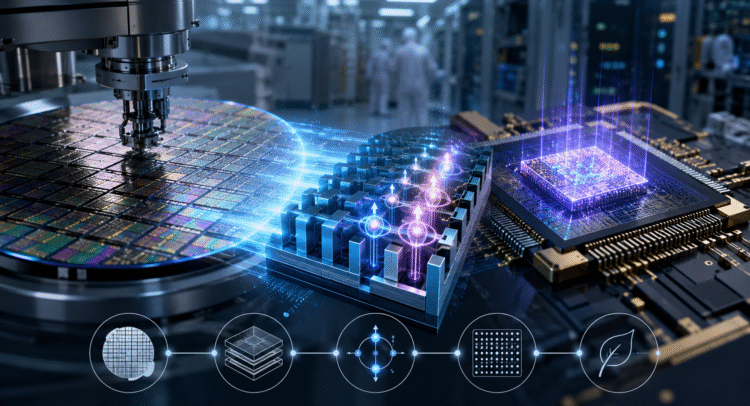
Quantum Motion has raised $160 million to fund its plan to build quantum computers using the same silicon chip tools used in today’s tech world. The London-based firm wants to make quantum computers that are smaller, cheaper, and more power-efficient than many rival systems.
Claim 55% Off TipRanks
Trade IBM with leverageThe idea is simple. Most quantum firms use rare or hard-to-scale tech to make qubits, which are the core units inside a quantum computer. International Business Machines (IBM) and Alphabet (GOOGL), for example, use superconductor-based systems. Other firms like IonQ (IONQ) and D-Wave Quantum (QBTS) use atoms and lasers. However, Quantum Motion is taking a more common route. It wants to turn standard silicon transistors into qubits.
“We just kind of started the company in reverse,” CEO James Palles Dimmock told Reuters. He said the firm asked, “What are the minimum adaptations that we can make to transistors to turn them into high-quality qubits?”
Why Silicon Could Matter
The key issue in quantum is scale. A few qubits can show promise, but useful quantum systems may need thousands or even millions of qubits. That is why silicon could be a major edge. The chip sector already knows how to make tiny parts at a huge scale.
Quantum Motion uses electron-spin methods. In a normal transistor, it is either on or off. In Quantum Motion’s design, one electron is held in place and then moved with a magnetic field. This idea is not new, and Intel (INTC) is also working on it. Still, Quantum Motion says it has a path to build the chips with GlobalFoundries (GFS).
The company also claims this route could cut costs. Palles Dimmock said useful quantum computers could one day cost $10 million to $20 million. That would be a big deal in a field where systems can be large, custom-built, and costly.
Investors Back a More Practical Quantum Path
The funding round was co-led by DCVC and Kembara. It also drew support from British Business Bank and Firgun, along with current backers such as Oxford Science Enterprises, Inkef, Bosch Ventures, Porsche Automobil Holding, and Parkwalk Advisors.
For investors, the main point is clear. Quantum Motion is not just chasing a better qubit. It is betting that the best way to scale quantum is to use the same chip base that built the modern tech world. If that works, silicon could help move quantum computing from the lab to the market at a more practical cost.
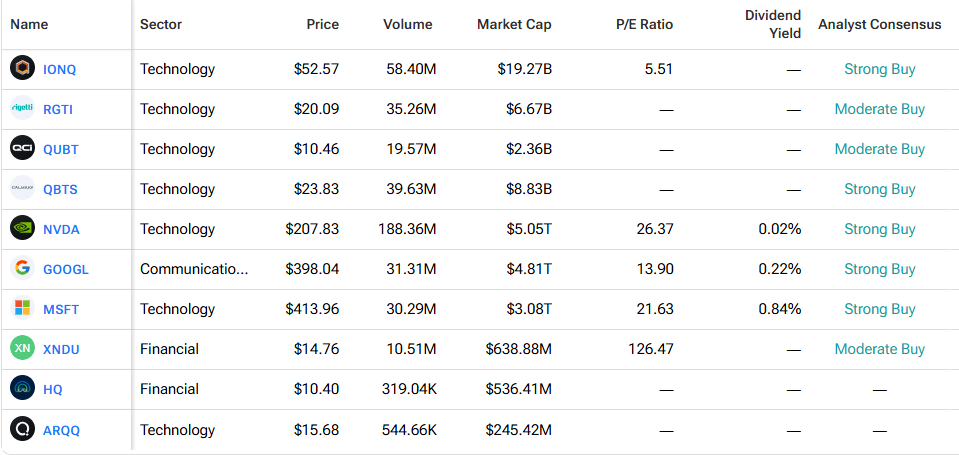
We used TipRanks’ Comparison Tool to align major quantum stocks, some of which appear in the piece. It’s a great tool for gaining an in-depth view of each stock and the broader quantum computing industry.