


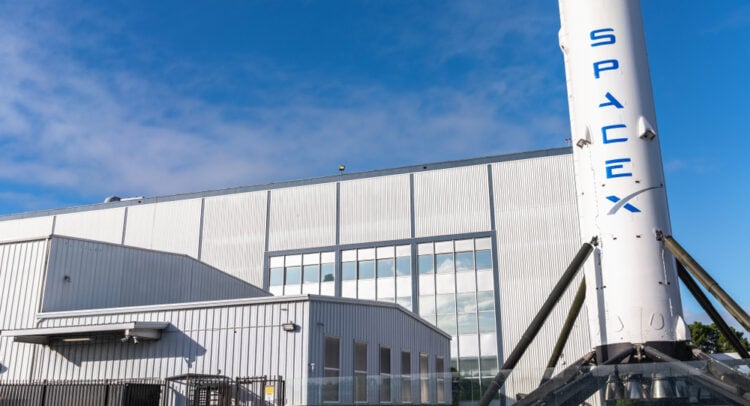
New updates have been reported about SpaceX.
Meet Samuel – Your Personal Investing Prophet
- Start a conversation with TipRanks’ trusted, data-backed investment intelligence
- Ask Samuel about stocks, your portfolio, or the market and get instant, personalized insights in seconds
SpaceX’s strategic narrative is shifting as its merger with Elon Musk’s AI venture xAI reframes the company’s long-term vision from Mars colonization to building off-world infrastructure to power advanced AI. In internal discussions cited in the TechCrunch report, Musk now positions a future lunar “mass driver” launching AI satellites into deep space, plus orbital data centers, as the key synergy between SpaceX’s launch capabilities and xAI’s computing demands.
This comes after SpaceX has effectively downgraded its Mars colonization agenda, refocusing the Starship program on nearer-term, revenue-generating missions, including launches for the Starlink constellation and approximately $4 billion in NASA contracts for lunar astronaut landings. The new moon-centric concept extends that pivot: Musk speculates about a lunar city manufacturing space-based supercomputers and using a maglev-style launcher to distribute them across the solar system, theoretically to capture a meaningful fraction of the sun’s energy for AI training.
For SpaceX, the orbital and eventual lunar data center vision provides a fresh investment and hiring narrative ahead of a widely anticipated IPO, echoing how “Occupy Mars” previously unified engineering efforts and differentiated the company from traditional government contractors. The prospect of building AI-focused infrastructure in orbit could support continued demand for heavy-lift Starship launches and Starlink expansion if forecasts of soaring terrestrial AI power costs materialize in the 2030s.
However, the article underscores that the more extreme elements of the plan—mass-producing advanced computers on the moon and sustaining a lunar city—depend on dramatic reductions in space access costs and substantial advances in in-space manufacturing, conditions that remain speculative. Still, the combination of xAI and SpaceX gives Musk a new, AI-centric storyline for investors and engineers, positioning SpaceX not just as a transport and broadband provider but as a potential enabler of solar-system-scale computing infrastructure, with significant upside if public markets embrace the vision as they did Tesla’s growth story.