


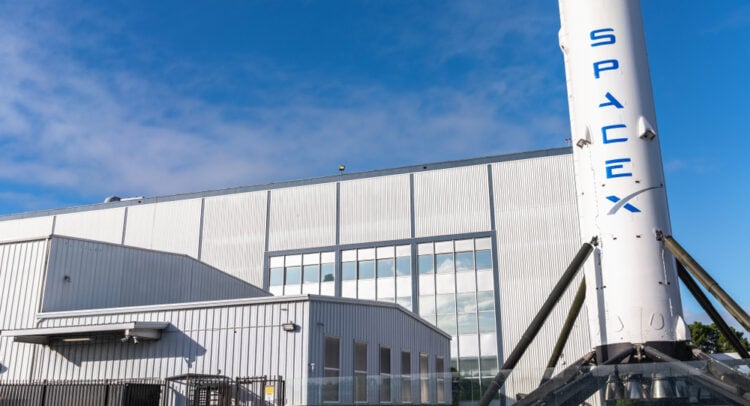
According to a recent LinkedIn post from SpaceX, the company appears to be significantly expanding its Starship Components Machining operations in Hawthorne, California over the next 18 months. The post describes plans to integrate design, machining, assembly and test in a tightly coupled feedback loop aimed at accelerating Starship hardware iteration.
Claim 55% Off TipRanks
- Unlock hedge fund-level data and powerful investing tools for smarter, sharper decisions
- Discover top-performing stock ideas and upgrade to a portfolio of market leaders with Smart Investor Picks
The LinkedIn post highlights an ambitious capacity target, citing the onboarding of roughly one kiloton of machining equipment to process about 40,000 kilograms of material per week for Starship. These precision components are described as supporting critical functions such as propellant flow to Raptor engines, attitude control via gas thrusters, reentry control surfaces and mission-duration-preserving systems.
As shared in the post, SpaceX is recruiting across a broad range of roles, including assembly and CNC machinists, CNC and CMM programmers, precision inspectors, multiple levels of manufacturing engineers, a machining supervisor and software and automation engineers. The emphasis on +/- 5 micron precision with superalloys and on high-throughput inspection and metrology suggests a push toward higher reliability and scalability in production.
The post also points to internal development of factory software to narrow the gap from CAD to part-in-hand through automated CAM generation, scheduling, inspection reporting and real-time visibility. For investors, this focus on vertically integrated, software-driven manufacturing could indicate an effort to reduce unit costs, shorten development cycles and increase Starship launch cadence over time.
If successfully implemented, the described expansion may enhance SpaceX’s competitive position in large reusable launch systems by improving manufacturing throughput and quality. While the post is largely focused on talent acquisition and long-term vision for Starship, the underlying investments in capacity and process automation could support future revenue growth and margin improvement as Starship moves toward higher operational frequency.