


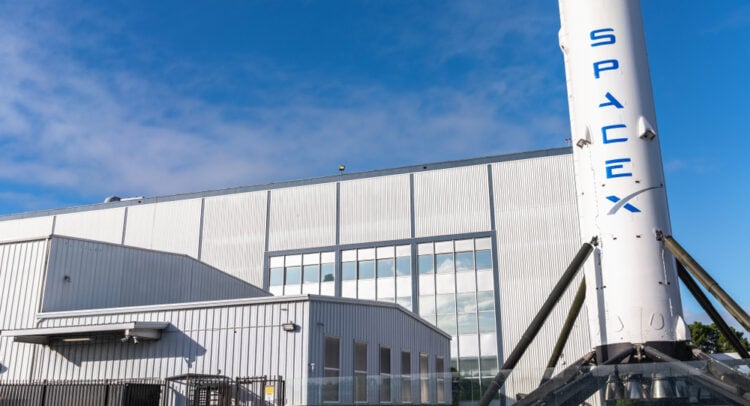
According to a recent LinkedIn post from SpaceX, the company is emphasizing the scale-up of its Starship Components Machining operations in Hawthorne, Calif., as a key enabler of Starship development. The post highlights plans to grow the Starship Components Machining team significantly over the next 18 months to tighten the loop between design, machining, assembly and testing.
Claim 55% Off TipRanks
- Unlock hedge fund-level data and powerful investing tools for smarter, sharper decisions
- Discover top-performing stock ideas and upgrade to a portfolio of market leaders with Smart Investor Picks
The LinkedIn post indicates SpaceX is onboarding about 1 kiloton of equipment to process roughly 40,000 kilograms of material per week for Starship hardware. These precision parts are described as critical to propellant flow, vehicle attitude control, aerodynamic surface actuation and mission-duration management for the Starship system.
The post details responsibilities across a range of machining and manufacturing roles, including work on regulators, solenoids, actuators and valves with tolerances down to +/- 5 microns using Inconel, stainless steel and other superalloys. It also underscores a focus on high-throughput inspection, metrology, finishing processes and factory software that automates CAM generation, scheduling and real-time production visibility.
Multiple openings are listed for machining, manufacturing engineering, quality inspection, supervision, software engineering and automation and controls, suggesting a broad-based expansion of internal manufacturing capabilities. The scale and diversity of these roles point to an effort to vertically integrate critical Starship components and to increase production throughput.
For investors, the post suggests that SpaceX is investing heavily in in-house precision manufacturing infrastructure to support higher Starship build rates and faster iteration cycles. If successful, this build-out could lower unit costs, improve quality control and accelerate development timelines, which may strengthen SpaceX’s competitive position in heavy-lift launch and long-duration spaceflight.
The focus on automation and factory software also implies a strategy toward scalable, data-driven production that could enhance margins over time as volumes ramp. More robust manufacturing capacity for Starship components may be a prerequisite for monetizing future revenue streams such as high-cadence launches, cargo services and, eventually, crewed missions beyond low Earth orbit.