U.S. brokerage firm Robinhood (HOOD) is launching a $1 billion closed-end fund to give everyday investors exposure to late-stage private companies, including fintech giant Stripe.
Meet Samuel – Your Personal Investing Prophet
- Start a conversation with TipRanks’ trusted, data-backed investment intelligence
- Ask Samuel about stocks, your portfolio, or the market and get instant, personalized insights in seconds
The move marks a strategic expansion into private markets, as many high-profile startups continue to delay initial public offerings (IPOs), limiting retail access to pre-IPO growth.
Robinhood Targets Stripe as a Key Holding
According to reports, the fund, named Robinhood Ventures Fund I (RVI), will list on the New York Stock Exchange under the ticker RVI. It plans to issue 40 million shares at $25 apiece, targeting approximately $1 billion in proceeds. Of those shares, 5 million are being offered by Robinhood, while the fund itself will issue 35 million.
The Robinhood fund, RVI, features an initial portfolio of pre-IPO private companies, including SpaceX, Boom Supersonic, Databricks, Oura, Ramp, and others. More importantly, Stripe is expected to be a key holding, as part of the fund’s strategy to maintain diversification.
According to a Feb. 17 announcement, fintech powerhouse Goldman Sachs is leading the deal. Interestingly, investors on the Robinhood platform can request IPO allocations starting Feb. 17, ahead of trading scheduled for Feb. 26. An initiative, CEO of Robinhood Vlad Tenev said, is designed to “break down longstanding barriers in capital markets” by broadening retail access to private-company investments.
Robinhood Opens Private Market Exposure to Investors
According to the IPO announcement, no single company is projected to exceed 20% of total assets. Investors will also not directly own shares in Stripe or any other private companies; instead, they will hold shares in the closed-end fund, which deploys capital to acquire these stakes.
This structure allows fund shares to trade on the open market. But, closed-end funds carry unique risks. Unlike mutual funds, they do not continuously create or redeem shares.
“Investors need to remember they’re buying a vehicle that will trade on sentiment, liquidity, and supply-demand dynamics, not just underlying net asset value,” said John Cole Scott, president of CEF Advisors.
The RVI fund charges a 2% annual management fee, calculated quarterly, reduced to 1% for the first six months, with no performance fees. The fund will not pay regular dividends, though Robindhood’s CFO, Shiv Verma, said “distributions could be considered if excess cash accumulates in the portfolio”.
Is Robinhood Retail Investing?
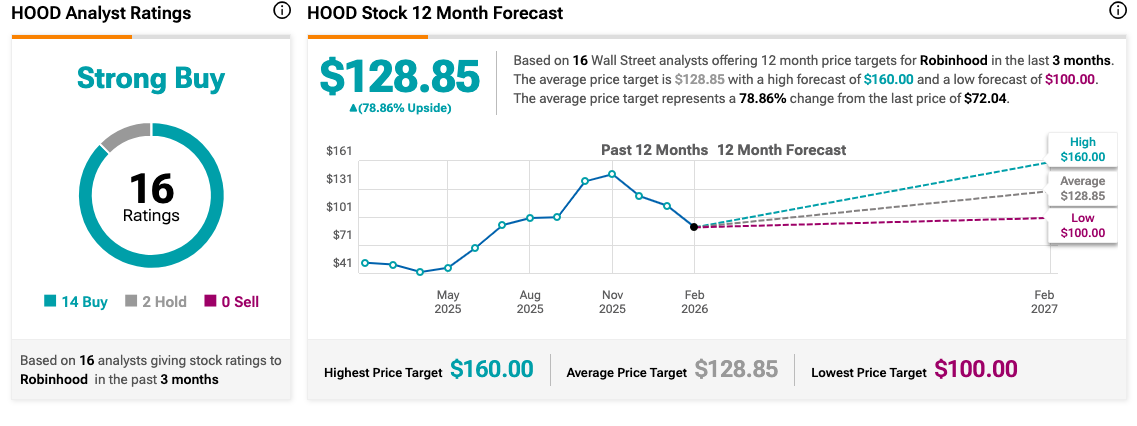
Robinhood is a major platform for retail investing, designed specifically to provide individual, non-professional investors with access to financial markets. The brokerage firm’s growing interest in offering exposure to private companies like Stripe underscores its broader strategy to expand retail access to investment opportunities once largely reserved for institutional investors. At the time of writing, the price of the HOOD stock is $72.04, with an average price target of $128.85 and an upside potential of 79.16%, according to TipRanks analysts’ forecasts.