OpenAI, the company behind ChatGPT, is facing a wrongful death lawsuit filed in a California court, sparking more concerns about chatbot safety. The case claims that ChatGPT gave harmful drug-related guidance, which is now linked to an accidental overdose involving 19-year-old Sam Nelson. It has raised broader questions about how much responsibility artificial intelligence (AI) systems should bear for the advice they provide. The situation adds to the growing debate around AI risk, legal pressure, and user safety in real-world use.
Claim 55% Off TipRanks
Trade AMZN with leverageLawsuit Claims Emerge Over OpenAI’s ChatGPT Guidance
The parents of the late Nelson filed a wrongful death lawsuit in California, naming OpenAI and its CEO, Sam Altman, in the case. They claim ChatGPT gave harmful drug guidance linked to the accidental overdose of their 19-year-old son. The filing places direct responsibility on the company for the outcome of those interactions.
The complaint said the AI chatbot advised on drug combinations, including prescription and herbal substances. It is also claimed that responses were given in a medical-style tone that sounded authoritative. The filing adds that ChatGPT used memory features to personalize replies, and that behavior changed in later 2024 versions.
OpenAI described the situation as heartbreaking and said an older version of ChatGPT was involved. The company added that this version is no longer in use. It also said safety systems continue to be improved, with input from experts, especially for sensitive topics.
AI Lawsuits Gain Momentum Across Tech Sector
More lawsuits are being filed against AI companies as concerns grow over chatbot behavior. Many of these cases involve claims linked to self-harm, mental health issues, and violence. Attention is now turning to who should be held responsible for outputs from generative AI systems. Courts are beginning to test how far AI liability should extend.
At the same time, companies are facing closer scrutiny over how quickly they release AI tools. Some claims suggest safety testing was limited before launch. This has increased focus on chatbot design and how risks are managed. Pressure is also growing for stronger rules and tighter oversight across the sector.
What Is the Best AI Stock to Buy?
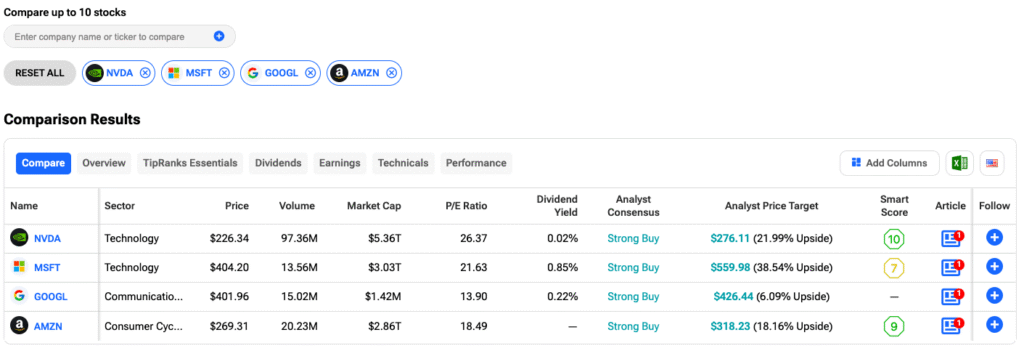
According to TipRanks analyst data, Nvidia (NVDA), Alphabet (GOOGL), Microsoft (MSFT), and Amazon (AMZN) are all rated Strong Buys. NVDA has a 12-month projected upside of more than 37%, while GOOGL carries an upside of 6%. Additionally, MSFT is forecasted to jump about 38%, and AMZN is expected to rise by roughly 18%. For more information on these AI stocks, ratings, and performance metrics, investors can visit the TipRanks Stocks Comparison Center.