U.S. defense firms are asking Washington for more time before a key rule on China supply takes effect. The rule, set for January 1, will bar defense firms from using some China-sourced rare-earth magnets in Pentagon deals. But the push may run into a tough White House stance, with President Trump warning this month: “NO MORE handing out Waivers like candy!”
Claim 55% Off TipRanks
- Unlock hedge fund-level data and powerful investing tools for smarter, sharper decisions
- Discover top-performing stock ideas and upgrade to a portfolio of market leaders with Smart Investor Picks
The magnets include samarium-cobalt and neodymium-iron-boron. They are used in a wide range of products, from phones and electric cars to fighter jets and weapons systems. However, China still has a firm grip on much of the rare-earth supply chain, making the shift difficult for U.S. defense firms.
The rule was first passed by Congress in 2018, during President Donald Trump’s first term. It applies if any stage of the supply chain took place in China, North Korea, Russia, or Iran.
Big Defense Names Could Feel the Pressure
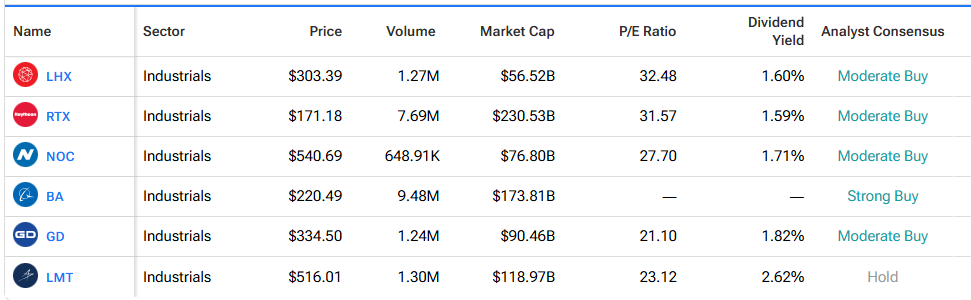
The companies most exposed are likely the large defense primes that use rare-earth magnets in missiles, aircraft, submarines, etc. That group includes Lockheed Martin (LMT), RTX (RTX), Northrop Grumman (NOC), Boeing (BA), General Dynamics (GD), and L3Harris Technologies (LHX).
Among them, Lockheed and RTX may face the closest watch. Lockheed has already dealt with a China magnet issue tied to the F-35, while RTX’s Raytheon unit supplies missile and air defense systems that need small, high-power magnets. Northrop Grumman, Boeing, General Dynamics, and L3Harris could also face added checks, since their programs rely on long supply chains and parts used in sensors, gear, and communications systems.
U.S. Wants Less China Risk
The push comes as the Trump team seeks to build a stronger U.S. rare-earth base. Still, experts say it may take years to build a full supply chain outside China.
Some defense firms argue they make up only a small part of the magnet market. As a result, they say they have less power to shape supply. Even so, the White House may not be keen to grant broad relief. Trump said this month that “all Federal agencies must buy American,” and added, “NO MORE handing out Waivers like candy!”
Supporters of the ban say the goal is clear. Abigail Hunter, from Safe’s Center for Critical Minerals Strategy, said the rule would “allow the United States, not an adversary, to define when, what, and how we source materials for our defense industrial base.”
Why It Matters for Investors
For the market, the story points to a long-term tailwind for U.S. rare earth and magnet firms. The rule is meant to drive demand toward U.S. and allied suppliers. However, it also shows that this market still faces real gaps.
The main issue is not just mining. It is also the full chain, from rare earths to metals to magnets. Until more supply comes online outside China, defense firms may face higher costs, supply risk, or delays.
That means the rare earth trade may stay in focus. But the path is likely to be slow, costly, and tied closely to U.S. policy.
We used TipRanks’ Comparison Tool to compare all defense stocks appearing in the piece. It’s a great tool for gaining an in-depth view of each stock and the broader defense industry.