


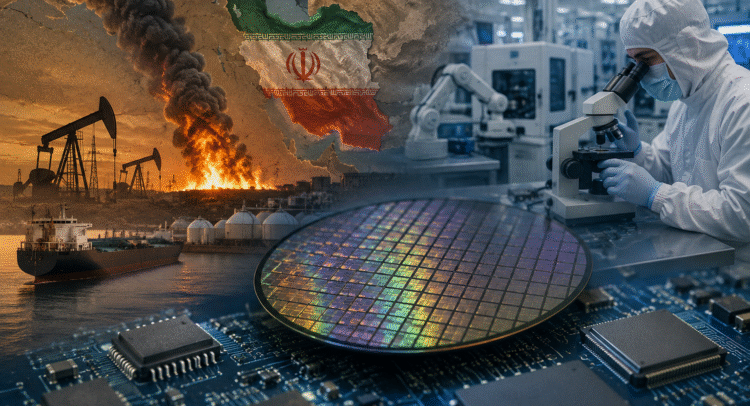
The AI trade is still giving chip stocks a lift, but the Iran war is adding a new layer of risk for the sector. Taiwan Semiconductor Manufacturing Company (TSM), the world’s top chip foundry and a key supplier to Nvidia Corporation (NVDA), warned that the war could raise the cost of key gases and other inputs.
Meet Samuel – Your Personal Investing Prophet
Explore NVDS for 2X short leverage on NVDABecause chip plants rely on a steady flow of gases, chemicals, metals, freight, and power, a rise in costs could put margins under strain, even while AI demand stays strong.
Foxconn Technology Group (HNHPF), the world’s largest contract maker of electronics, also flagged events in the Middle East as a key issue for the year. Meanwhile, Infineon Technologies AG (IFNNF), a major German chipmaker, said the war could raise costs for metals, energy, and freight.
Helium and Energy Are in Focus
One key risk is helium. The gas is vital for chip production, and Qatar, one of the world’s top helium suppliers, has seen export flow hit by the war. According to the report, Qatar supplied more than 30% of the market in 2025.
Francisco Jeronimo, an analyst at IDC, told CNBC that chip firms may face further pain even if the war cools. “Even with a potential ceasefire, the supply side damage does not improve overnight,” he said.
So far, the hit to earnings seems small. However, some firms are already seeing real costs. VAT Group AG (VTTGF), which supplies parts to chipmakers, said the war forced it to reroute goods and hurt first-quarter sales by 20 million to 25 million Swiss francs, or about $25.5 million to $32 million.
AI Demand Is Still the Main Driver
For now, the AI boom is still stronger than war fears. The PHLX Semiconductor Sector Index has climbed 41% over the past three months, proving investors are still focused on demand for AI chips, data centers, and high-end hardware.
Still, the risk is clear. If the war lasts through the summer, higher costs could become more evident in future earnings. The best-positioned firms will likely be those with extra stock, multiple sources for key parts, and the ability to pass higher costs on.
As Jeronimo put it, companies with “safety stock, diversified sourcing and pricing power” should be better shielded. Everyone else may face more cost pressure through the rest of 2026.
We used TipRanks’ Comparison Tool to align all the stocks appearing in the piece. It’s a great tool to gain an in-depth view of each stock and the broader semiconductor industry.
