Shares in Home Depot (HD), the largest home improvement retailer in the world, are down roughly 8% year-to-date and by about 25% from the one-year high of $426.75. This slump — which comes at a time the benchmark S&P 500 index (SPX) is up about 6% YTD and has hit an all-time-high of 7,329.23 on a rebound in tech stocks and reports of strong earnings — is recreating a rare market setup last seen in the months before the catastrophic 2008 global financial crisis, according to analysts.
Claim 55% Off TipRanks
- Unlock hedge fund-level data and powerful investing tools for smarter, sharper decisions
- Discover top-performing stock ideas and upgrade to a portfolio of market leaders with Smart Investor Picks
HD Slump Recreates Historic Pre-Crisis Pattern
The S&P 500 tracks 500 of the largest companies that are publicly traded in the U.S. and is a key gauge of the overall health of the U.S. economy. With more than $300 billion in market capitalization, Home Depot is a mega-cap stock and plays a key role in the index.
The retailer is considered a bellwether whose performance can influence other related companies. In addition to this, Home Depot enjoys this status as its business sits at the intersection of U.S. housing activity and consumer spending.
In other words, the retailer’s performance is also seen as a signal of the state of the American economy, as consumers only spend more on home improvement products, including building and remodeling, when they have higher disposable income.
U.S. Housing Crisis Haunts Home Depot
However, Home Depot right now appears to be showing a rare deviation from that relationship with the index. According to Lawrence McDonald, a CNBC contributor and co-author of the New York Times best-selling book, When Markets Speak, this trend was seen in October 2007.
In that month, the S&P 500 hit its highest peak before the 2008 global financial crisis came knocking in the following September. In that month, HD stock was down about 23 to 24.5% from its record high at the time.
Explaining the unusual recurrence, McDonald pointed to the six-year-high rise in home foreclosures — when a lender takes action to reclaim a property as owners become incapable of making their mortgage payments — as likely behind the trend. This comes as economic uncertainty has led to reduced demand for home improvement products, putting pressure on Home Depot’s shares.
“U.S. homes with foreclosure filings rose about 26% year-over-year in Q1 2026 (119,000), hitting a six-year high, driven largely by rising property taxes, insurance premiums, Homeowners Association fees, and other ownership costs rather than mortgage rates or a broad lending crisis,” McDonald explained in a post on X.
Analysts Expect Mixed Q1 Earnings from Home Depot
The market setup comes as Home Depot is expected to release its earnings results for its fiscal 2026 first quarter on May 19. Wall Street is bracing for a mixed earnings performance.
Analysts see Home Depot’s revenue rising by about 4% year-over-year to $41.64 billion but expect its adjusted earnings per share to fall by about the same measure to $3.41.
Is Home Depot a Good Stock to Buy?
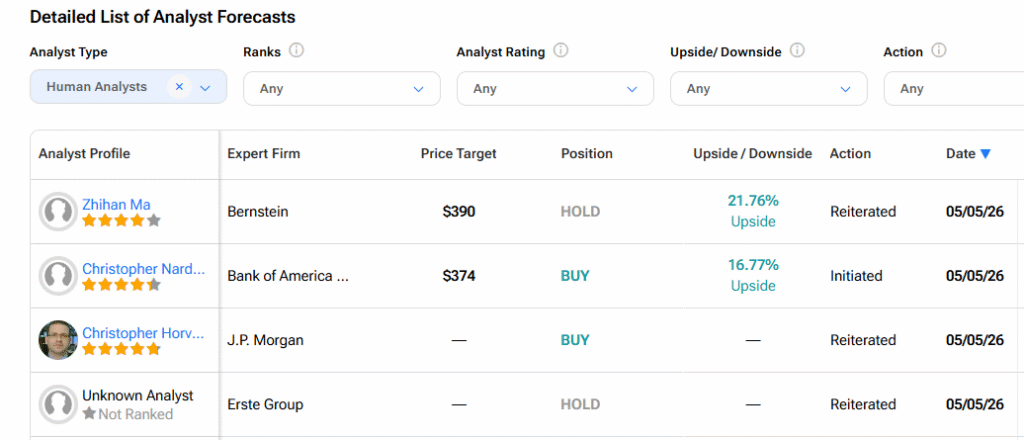
On Wall Street, Home Depot’s shares continue to boast a Strong Buy consensus rating from analysts. This is based on 17 Buys and four Holds issued over the last three months.
In addition, the average HD price target of $420 indicates about 31% upside in the months ahead.