Electric vehicle giant Tesla (TSLA) is known for its self-driving systems. Keeping those systems running smoothly—even with a few hiccups as we have seen in the past—requires a lot of computational muscle. Tesla’s numbered hardware packages work to keep Tesla cars on the road, and for the most part, succeed. Tesla recently rolled out HW4 Plus, a system that offers significant improvements over its predecessor. But Tesla investors feared the worst, and sent shares plunging over 3% in Thursday afternoon’s trading.
Claim 55% Off TipRanks
Trade TSLA with leverageThe upgrade features an outright doubling of available memory. Memory increases from 16 gigabytes to 32 gigabytes per chip in the new system. Since there are two chips involved, total system memory now stands at 64 gigabytes. This also stands to answer a critical question: Tesla’s AI5 chip will not be coming to Tesla vehicles after all. Instead, the AI5 chip will go into the Optimus robot line, as well as for data centers.
However, the adoption of HW4 Plus leaves a critical unanswered question in users’ minds. Specifically, what about all those Teslas currently running on HW4 and HW3? Tesla told buyers that HW3-equipped cars had “all the hardware needed for full self-driving.” This turned out to not be the case, as HW3 had about an eighth of the memory bandwidth that HW4 had. Tesla is considering building entire factories to retrofit the HW3 cars accordingly, but this is an expensive proposition to say the least.
Cow Hollow Charger a Problem
We first heard, some time ago, about a Tesla charging lot in the San Francisco Bay Area that was proving to be a bit of a problem. It was open 24 hours, so it tended to draw a less savory crowd. Eventually, the lot became such a problem that the city stepped in.
A chain-link gate blocking access from a back alley was installed, and new regulations went in that would impact any future charging locations. New charging locations need city approval before opening now, reports note, and conditional use permits require adherence to a set of “Good Neighbor Policies” covering things from ambient noise to line management.
Is Tesla a Buy, Hold or Sell?
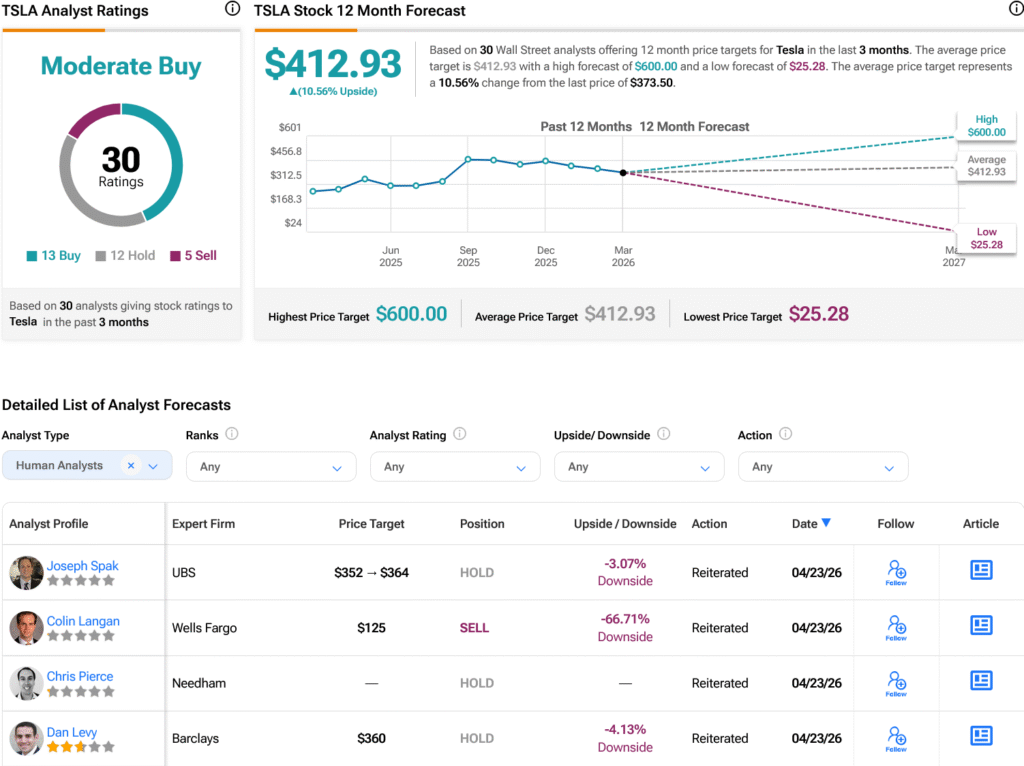
Turning to Wall Street, analysts have a Hold consensus rating on TSLA stock based on 13 Buys, 12 Holds, and five Sells assigned in the past three months, as indicated by the graphic below. After a 49.32% rally in its share price over the past year, the average TSLA price target of $412.93 per share implies 10.56% upside potential.