


Meridian Energy Limited ((MDDNF)) has held its Q2 earnings call. Read on for the main highlights of the call.
Claim 55% Off TipRanks
- Unlock hedge fund-level data and powerful investing tools for smarter, sharper decisions
- Discover top-performing stock ideas and upgrade to a portfolio of market leaders with Smart Investor Picks
Meridian Energy’s latest earnings call struck an upbeat tone, with management highlighting a sharp rebound in profitability, stronger cash generation and a reinforced balance sheet. They balanced this optimism with frank discussion of rising network charges, project delays, spill losses and uncertain battery economics, framing the story as robust but not without real execution risks.
Surging cash flow and EBITDAF rebound
Meridian reported operating cash flow of $336 million in H1 FY26 and EBITDAF of $506 million, almost double the prior first half. Management stressed that EBITDAF is $249 million higher than the July–December 2024 period, underlining a strong recovery in operating performance and improved monetisation of its generation portfolio.
Underlying profitability swings back to solid profit
Underlying net profit after tax came in at $143 million, a sharp turnaround from a $5 million loss in the prior comparable half. Fair‑value hedge movements contributed a $120 million pre‑tax gain versus a large loss last year, improving comparability while signaling more stable risk management outcomes.
Retail growth and fatter margins support earnings
Retail sales rose by $133 million, with about two‑thirds driven by higher volumes and the rest by better pricing. Overall retail volumes climbed 12%, mass‑market volumes jumped 16% and a roughly 10% uplift in average mass‑market prices delivered an extra $117 million of revenue and stronger retail margins.
Record wind and strong hydro lift generation
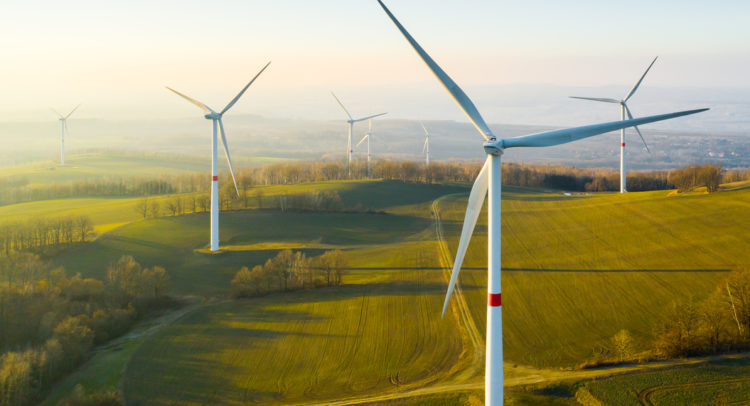
Total generation was 892 GWh, or 14%, higher than the prior July–December period amid the second‑highest hydro inflows on record and record wind output. Wind farm availability improved from below 90% in May 2025 to above 92% by December, enabling a record first‑half contribution from wind assets.
Energy margin tailwinds boost financial performance
Meridian’s physical energy margin expanded by $246 million, supported by higher generation and portfolio optimisation. Financial energy margin increased by $20 million, aided by the sale of an additional 953 GWh of ASX contracts and a $72 million reduction in demand response costs, underscoring disciplined market positioning.
Balance sheet strength and simplified funding
Net debt fell to $1.7 billion with total borrowings at $1.9 billion, bringing net debt‑to‑EBITDAF down to 1.9 times from 2.5 times in June. The company also streamlined funding through a $1 billion committed syndicated facility and a $350 million issue of 6.5‑year unsecured green bonds, supporting its growth agenda.
Progressive dividend growth reinstated
Management reaffirmed a progressive dividend stance, lifting the interim ordinary dividend 4% to $0.0640 per share, imputed at 85%. A dividend reinvestment plan is being applied at a 2% discount to volume‑weighted average price, signalling confidence in cash generation and capital flexibility.
Deep growth pipeline underpins medium‑term expansion
Since 2024 Meridian has added 542 GWh of new generation and now has 702 GWh under construction, with over 2,500 GWh either built, being built or consented, implying more than 15% growth once complete. The company expects to commit to around 1,300 GWh of additional projects in the next year and has another 720 GWh in consenting and roughly 2,900 GWh set to enter consenting within 24 months.
Capex plans steady despite a heavier spend profile
First‑half capital expenditure was $86 million, including $53 million of growth capex, and full‑year capex guidance remains at $330 million to $360 million. Operating cost guidance is unchanged at $311 million to $316 million, though management now expects the out‑turn to land toward the top of that range.
Low wholesale prices squeeze generation revenue
Average generation prices were more than 50% lower than a year ago due to abundant hydro storage and strong inflows, pushing some short‑term wholesale prices to extreme lows. January reportedly cleared near $1 per MWh, materially reducing short‑term arbitrage opportunities, especially for battery assets relying on price volatility.
Spill losses highlight storage inefficiencies
The exceptionally wet conditions led to significant spill events, with some 521 GWh of generation effectively wasted. Management argued that a one‑meter higher operating range at Pukaki could have more than halved this spill, spotlighting the system‑wide value of more flexible hydro storage settings.
Regulated network charges drive bill inflation
Executives pointed to Commerce Commission‑determined transmission and distribution increases as a key factor behind rising customer electricity bills. These regulated cost uplifts are expected to keep flowing through for at least three years and are difficult for retailers to offset, creating ongoing pressure on end‑user prices.
Project delays and consenting risks drag timelines
The Te Rere Hau project has been pushed back by consenting issues, including aviation‑related constraints at Marima Peak, adding frustration and schedule uncertainty. Reconsenting for assets such as in the Waikato region carries appeal risk and potential legal costs, while contingent storage projects are progressing more slowly amid regulatory and operational hurdles.
Platform migration raises transitional operating costs
Meridian’s migration of retail customers onto the Kraken platform has been deliberately slowed to protect service quality, leading to a prolonged period of dual systems. Running both Kraken and the legacy Flux platform through at least the end of the calendar year, and possibly into 2027, is elevating operating and implementation costs during the transition.
Battery projects face challenging economics
Battery returns remain uncertain, with the Ruakaka asset seeing limited arbitrage opportunities in the current low‑price environment. Management said the viability of a proposed four‑hour Manawatu battery hinges on further falls in battery costs and indicated suppliers must improve pricing for such projects to stack up economically.
Timing effects weigh on cash conversion metrics
Gross operating cash flows were $85 million lower than EBITDAF, largely due to timing differences between derivative earnings recognition and cash settlements. A payment under the Huntly strategic energy reserve arrangement also weighed on reported operating cash flows in the period, temporarily dampening cash conversion.
Market oversupply and rising build costs loom
Management acknowledged that the sector’s sizeable development pipeline could shift the market from undersupply to oversupply before 2030 if demand growth lags. At the same time, unit costs for new wind and solar projects have risen toward around NZ$4 million per MW in some cases, putting upward pressure on project economics and levelised costs.
Forward guidance: heavy investment with disciplined costs
Looking ahead, Meridian guided to a heavy investment phase, planning to spend more than $1.2 billion across Mt. Munro, Te Rere Hau and Te Rāhui Solar Stage 2, adding about 1.3 TWh of new output while targeting roughly 30% market share. The company maintained full‑year operating cost guidance at $311 million to $316 million and capex at $330 million to $360 million and reiterated its progressive dividend policy, while signalling that the energy component of customer prices should track at or below inflation by 2027–28 even as network charges remain a headwind.
Meridian’s earnings call painted the picture of a generator‑retailer in strong financial shape, actively funding a large pipeline of renewables despite regulatory friction and volatile wholesale conditions. For investors, the combination of robust cash flow, a strengthening balance sheet, resumed dividend growth and a sizeable, though higher‑cost, development slate offers both upside and execution risk in the years ahead.