


Galp Energia ((GLPEY)) has held its Q1 earnings call. Read on for the main highlights of the call.
Meet Samuel – Your Personal Investing Prophet
- Start a conversation with TipRanks’ trusted, data-backed investment intelligence
- Ask Samuel about stocks, your portfolio, or the market and get instant, personalized insights in seconds
Galp Energia’s latest earnings call struck a cautiously upbeat tone, with management stressing solid operational delivery and financial resilience despite turbulent markets. Production hit the top end of guidance, the balance sheet absorbed a sizeable working capital build, and hedging plus Midstream strength offer visible support, even as refining margins and macro volatility keep investors on alert.
Upstream Production Beats Targets, Bacalhau Ramps
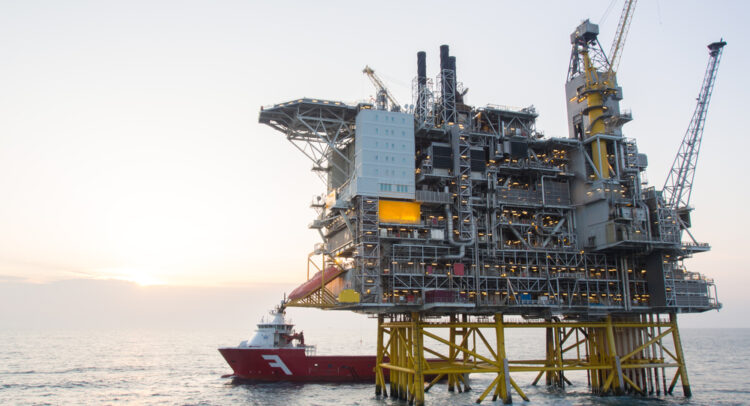
Galp’s upstream business delivered at the very top of its 2026 guidance range of 125,000–130,000 barrels per day, driven by strong performance in Brazil and incremental volumes from Bacalhau. Management expects Bacalhau to keep ramping through the year, with plateau production only reached later in 2026, adding a new cash engine to the portfolio.
Balance Sheet Holds Firm Despite Working Capital Drag
Net debt remained broadly flat quarter on quarter, even though Galp absorbed roughly €200 million of working capital build amid rising commodity prices. This stability underlines the group’s balance sheet resilience and ability to fund growth while weathering short‑term cash flow headwinds.
Midstream Visibility and Locked-In 2026 Earnings
The Midstream business is set to contribute more than €500 million in 2026, with gas trading representing about 70% of that result. Crucially, management has already locked in around 70% of this trading exposure for 2026, providing a rare pocket of earnings visibility in an otherwise choppy commodity landscape.
Refining Runs Hard to Capture Margin Upside
Refining assets are operating with strong availability, and management intends to run them at full capacity to seize today’s favorable crack spreads. Since the quarter, average refining margins have hovered around $10–$12 per barrel, at times spiking into the $20s, offering meaningful upside if these conditions persist.
Hedging Shields Refining and LNG Cash Flows
Risk management remains central to Galp’s strategy, with approximately 28 million barrels of 2026 refining throughput hedged at about $8 per barrel, covering roughly one third of volumes. For LNG, about 70–75% of venture offtake for 2026 is already hedged, all under Board‑approved frameworks that aim to smooth cash flows without over‑locking upside.
Commercial Segment Shows Resilience Beyond Fuel
In the Commercial and retail segment, Galp has deployed campaigns and discount schemes to support customers and protect volumes, with March data showing a notable uptick, particularly in Spain. Non‑fuel activities now contribute about 22% of Commercial earnings, giving the segment a more resilient, diversified base.
Renewables Push Boosts Diversification and Optionality
Recent acquisitions have lifted wind to around 25% of Galp’s renewable generation mix, improving the balance between technologies and enhancing portfolio optionality. Management signaled it remains open to selective, opportunistic renewables deals that further diversify earnings away from traditional hydrocarbons.
Moeve Deal Advances Downstream Reshaping
Talks around the Moeve downstream merger are progressing positively, with management expecting a potential agreement around mid‑year and stressing value accretion. The transaction is designed to ring‑fence industrial and retail operations and make them self‑funded, supporting a more focused and capital‑disciplined downstream platform.
Clear Sensitivities Help Investors Map Volatility
To help investors navigate a volatile backdrop, Galp detailed explicit earnings sensitivities to commodity moves, guiding roughly $160 million of EBITDA or operating cash flow for each $5 per barrel change in Brent. It also flagged about $200 million of impact per $5 shift in refining margins, giving the market tools to gauge upside and downside.
Bacalhau’s Cash Engine Potential and Tax Edge
Once at plateau, Bacalhau is expected to generate around €400 million in operating cash flow, making it a cornerstone growth asset for Galp’s upstream portfolio. The field’s 50/50 concession and production sharing contract structure also implies a more favorable tax profile than some legacy assets, enhancing its net cash contribution.
Macro, Geopolitics and Margin Squeeze Cloud Near Term
Management devoted significant time to the impact of heightened volatility and geopolitical tensions, particularly in the Middle East, which have driven supply disruptions and pricing swings. Rising input costs and weaker product prices have compressed refining margins, with Europe hit harder than other regions due to higher gas prices and pressure on downstream profitability.
Equity Crude Discount and Hedging Gaps Add Risk
Galp’s equity crude has been selling at about a $5 per barrel discount, partly reflecting freight volatility and market dislocations, which softens realized upstream prices. While 2026 hedges are substantial, the lack of meaningful refining hedges beyond that year, together with an unhedged upstream position, leaves future cash flows more exposed to price swings.
Commissioning Hiccups, Working Capital and Namibia Uncertainty
Bacalhau remains in commissioning and ramp‑up, with management cautioning that some operational hiccups and shifting unit costs are still likely before reaching a steady‑state cost base. Meanwhile, working capital built by about €200 million and the uncertain timelines and accounting treatment around Namibia’s Mopane development add to near‑term cash flow and reporting complexity.
Guidance: Cautious Stance, Detailed Metrics
Galp maintained its 2026 production guidance at 125,000–130,000 barrels per day and kept its one‑third of operating cash flow distribution policy, but chose not to formally upgrade targets or distributions amid high volatility. Instead, it offered investors granular guidance on Bacalhau’s ramp‑up profile, refining and LNG hedges, midstream contribution above €500 million and quantitative sensitivity metrics while promising a fuller update around the next quarterly release.
Galp’s call painted a picture of a company executing well operationally and building future cash engines, even as macro headwinds and price swings inject uncertainty. For investors, the key takeaways are robust upstream delivery, an increasingly diversified and hedged portfolio and a cautious but confident stance on capital returns while management waits for markets to settle.