Shares of Beyond Meat (BYND) fell in after-hours trading after the vegan food company reported earnings for its first quarter of Fiscal Year 2026. The company reported a net loss of $0.06 per share, narrower than the consensus estimate of a loss of $0.12 per share and $0.80 per share in the year-ago quarter.
Claim 55% Off TipRanks
- Unlock hedge fund-level data and powerful investing tools for smarter, sharper decisions
- Discover top-performing stock ideas and upgrade to a portfolio of market leaders with Smart Investor Picks
Meanwhile, revenue decreased by 15.3% year-over-year to $58.2 million and missed analysts’ expectations of $59.6 million. The decline in topline was due to lower volumes in U.S. retail and foodservice and softer international foodservice demand.
Gross margin of 3.4% improved sharply from a gross loss of 10.1% a year earlier. The gains were supported by lower manufacturing costs, reduced inventory provisions, and higher net revenue per pound. The quarter also included $0.5 million in charges tied to the company’s exit from China.
U.S. Weakness Persists, International Retail Shows Strength
Beyond Meat’s revenue declines were driven largely by lower volumes:
- U.S. retail revenue fell 15.3% to $26.6 million
- U.S. foodservice dropped 29.7% to $6.6 million
- International foodservice declined 25.9% to $11.3 million
The bright spot was international retail, which grew 8.1% to $13.7 million, helped by stronger demand in Europe and favorable currency movements.
Across channels, the company cited weak category demand, reduced distribution, and lapping of prior QSR promotions as key headwinds.
Q2 Outlook
Given ongoing volatility in the plant‑based meat category, Beyond Meat provided limited forward guidance. For the second quarter of 2026, the company expects net revenues of $60 million to $65 million, implying modest sequential growth but continued year‑over‑year pressure.
Is Beyond Meat a Good Stock to Buy?
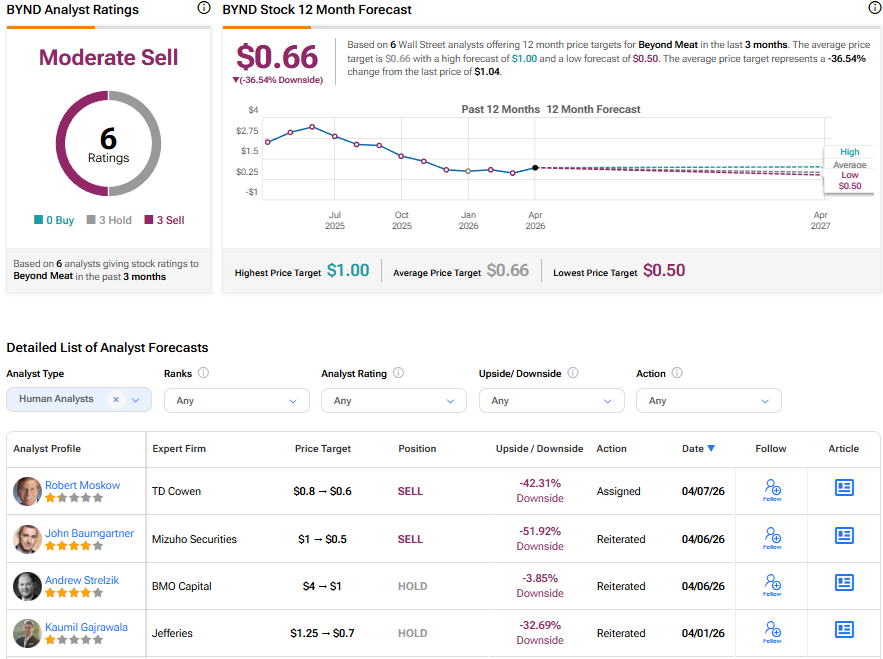
Turning to Wall Street, analysts have a Moderate Sell consensus rating on BYND stock based on three Holds and three Sells assigned in the past three months. Further, the average BYND price target of $0.66 per share implies 36.54% downside potential.