


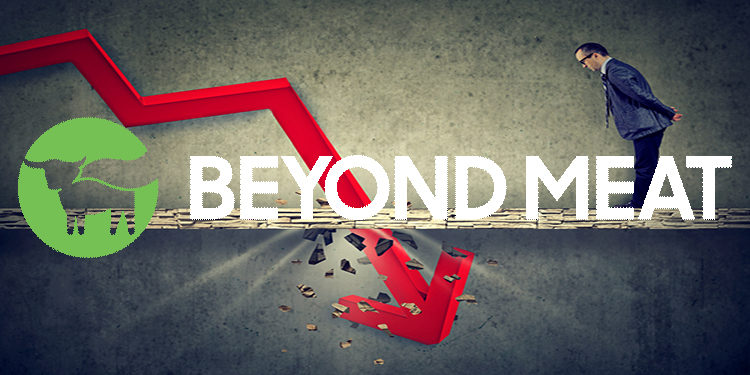
Beyond Meat (BYND), the plant-based meat company, saw its stock tumble 14% in after-hours trading on Wednesday after releasing its first-quarter results. While the company reduced losses and cut expenses, investors focused on slowing demand and weaker sales across its core business.
Claim 55% Off TipRanks
- Unlock hedge fund-level data and powerful investing tools for smarter, sharper decisions
- Discover top-performing stock ideas and upgrade to a portfolio of market leaders with Smart Investor Picks
What Really Spooked BYND Investors
The biggest concern in the report was a sharp decline in product demand. Beyond Meat said total product volume dropped 19.5% from a year ago, meaning the company sold much less product than it did last year. Meanwhile, in the U.S., sales remained weak across both grocery stores and restaurants. Internationally, demand from fast-food chains also declined, adding more pressure to overall revenue.
Overall, the company reported revenue of $58.2 million, down 15.3% year-over-year.
In addition, Beyond Meat’s guidance for the current quarter also disappointed Wall Street. The company expects second-quarter revenue between $60 million and $65 million, below analysts’ expectations of roughly $67 million. Management also warned about an uncertain operating environment, signaling that demand trends may remain weak in the near term.
Beyond Meat also continues to carry a heavy debt load of $411.6 million, which remains another key concern for investors.
Beyond Meat Pushes New Strategy as It Cuts Costs
During the earnings call, CEO Ethan Brown announced a broader shift in strategy, rebranding the company as “Beyond The Plant Protein Company.” Beyond Meat plans to expand into functional foods and beverages, including a new drink called Beyond Immerse that is expected to launch this summer.
Management sees the move as a new growth opportunity, but some investors remain cautious. Many believe the company still needs to stabilize demand for its core plant-based meat business before expanding into new categories.
Despite the sell-off, the report did include a few positive signs. Gross margins improved to 3.4%, compared to negative margins a year ago, while operating expenses fell nearly 25% as the company reduced salary and legal costs. Also, net loss came in at $0.06 per share, lower than the consensus estimate of a loss of $0.12 per share and $0.80 per share in the year-ago quarter.
Meanwhile, cash usage dropped to $11.8 million, marking Beyond Meat’s lowest quarterly cash burn in more than two years. Still, for Wall Street, those improvements were overshadowed by weaker demand and falling sales volumes.
Is Beyond Meat a Good Stock to Buy?
Turning to Wall Street, analysts have a Moderate Sell consensus rating on BYND stock based on three Holds and three Sells assigned in the past three months. Further, the average BYND price target of $0.66 per share implies 36.54% downside potential.
