


Bond exchange-traded funds (ETFs) are gaining popularity as investors seek steady income, diversification, and lower volatility in uncertain markets. Here, we will look at three bond ETFs offering high dividend yields: SPDR Bloomberg High Yield Bond ETF (JNK), SPDR Portfolio High Yield Bond ETF (SPHY), and iShares 0-5 Year High Yield Corporate Bond ETF (SHYG).
Claim 55% Off TipRanks
- Unlock hedge fund-level data and powerful investing tools for smarter, sharper decisions
- Discover top-performing stock ideas and upgrade to a portfolio of market leaders with Smart Investor Picks
TipRanks’ ETF Comparison Tool gives a snapshot of these ETFs across key metrics.
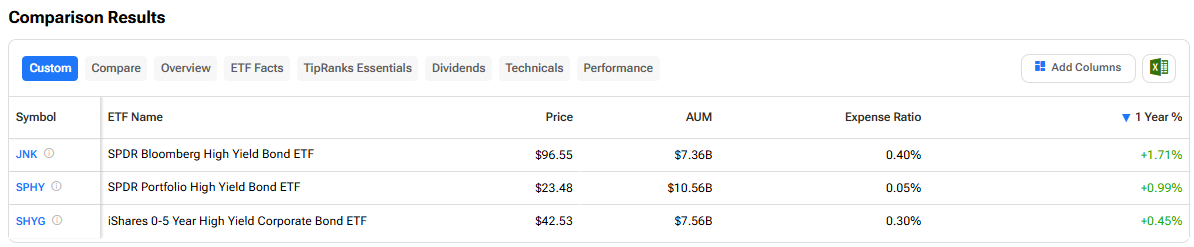
SPDR Bloomberg High Yield Bond ETF (JNK)
The JNK ETF tracks the Bloomberg High Yield Very Liquid Index and offers investors a diversified exposure to U.S. dollar-denominated high-yield corporate bonds having above-average liquidity. Generally, high-yield securities have a below-investment-grade credit rating and are commonly referred to as “junk bonds.”
Interestingly, the JNK ETF has paid about $6.37 per share in dividends over the past year. It offers a dividend yield of 6.6%.

SPDR Portfolio High Yield Bond ETF (SPHY)
The SPHY ETF tracks the ICE BofA US High Yield Index and offers exposure to U.S. dollar-denominated high-yield debt. It comprises high-yield bonds with broad maturities, allowing investors to benefit from various interest rate environments.
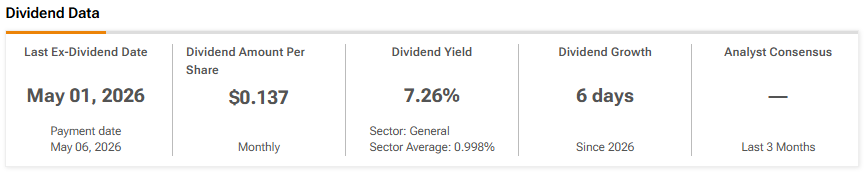
The SPHY ETF has paid about $1.704 per share in dividends over the past year. It offers a dividend yield of 7.26%.
iShares 0-5 Year High Yield Corporate Bond ETF (SHYG)
The SHYG ETF tracks the Markit iBoxx USD Liquid High Yield 0-5 Index and comprises U.S. dollar-denominated, high-yield corporate bonds with remaining maturities of less than five years. It helps investors benefit from the attractive yields offered by corporate bonds, while minimizing interest rate risk through its short-duration strategy.
With dividends of about $2.972 per share paid over the past year, the SHYG ETF offers a dividend yield of about 7%.
