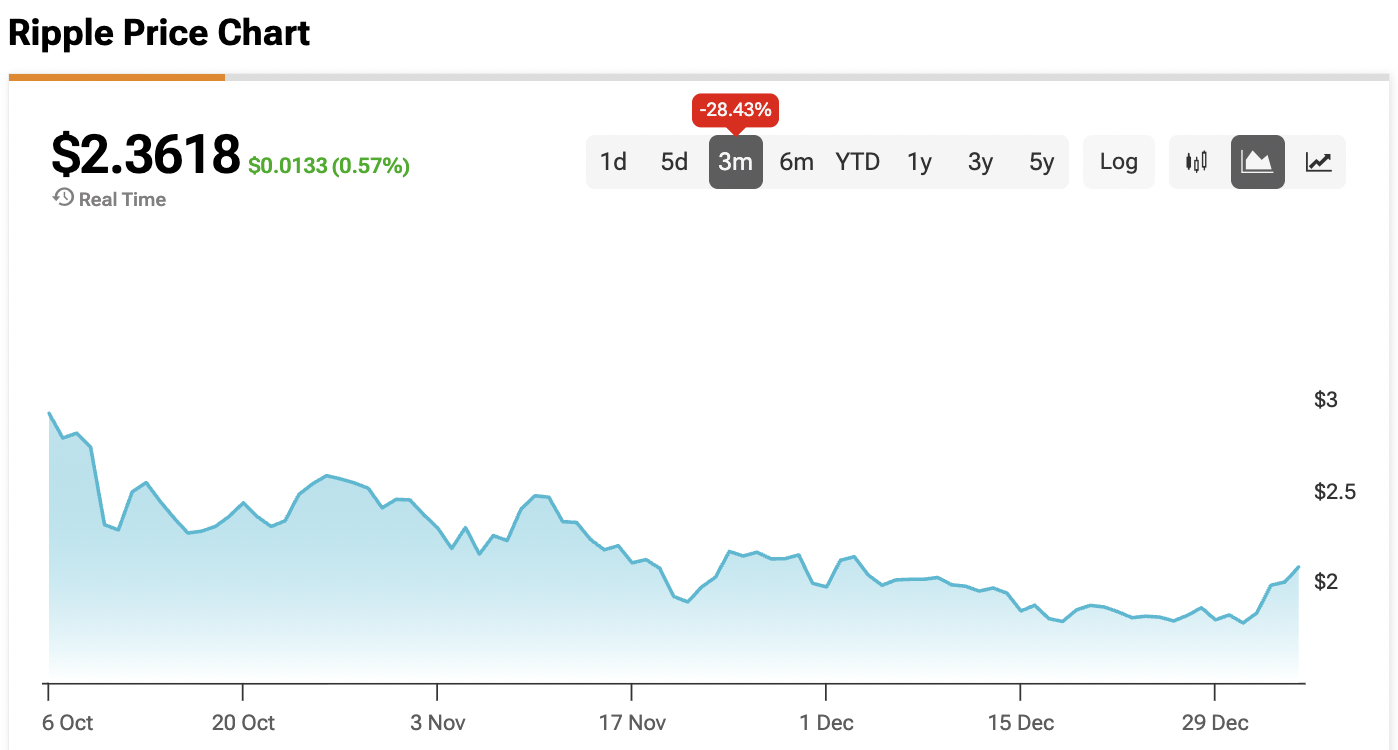
XRP (XRP-USD) is leading the crypto market this Tuesday with an 11% surge that has pushed the price to nearly $2.40. This move is the logical result of a massive shift in how the token is being held. Institutional investors are no longer just speculating; they are moving massive amounts of XRP into long-term storage, leaving almost nothing left for sale on public exchanges.
Claim 30% Off TipRanks
- Unlock hedge fund-level data and powerful investing tools for smarter, sharper decisions
- Discover top-performing stock ideas and upgrade to a portfolio of market leaders with Smart Investor Picks
This breakout through the $2.30 resistance level shows that the market has moved past the legal uncertainty of previous years. Here is the logic behind why the price is moving so fast.
XRP Gets a $1.23 Billion Vote of Confidence
The most direct driver of this jump is the explosive growth of U.S. spot XRP ETFs. These funds recorded $46 million in new cash on Monday alone, bringing the total cumulative inflows to $1.23 billion since their November launch.
The impact on the price is simple math. Unlike retail traders who flip tokens for a quick profit, these ETFs must buy and hold the underlying XRP to back their shares. This process effectively removes millions of tokens from the circulating supply every single day. With zero days of outflows recorded so far, the constant buying pressure from names like Franklin Templeton (BEN) and Bitwise is creating a permanent floor for the price.
Exchange Balances Hit Eight-Year Lows
While institutions are locking tokens away, the “liquid” supply available on exchanges has reached a key breaking point. Data shows that exchange reserves have plummeted from 3.95 billion XRP in October to just 1.6 billion today. This is the lowest amount of XRP available to the public since 2018.
This “supply shock” means that order books are incredibly thin. When there are fewer tokens sitting on an exchange, any new buy order has a disproportionate effect on the price. Investors are realizing that the days of “easy” XRP liquidity are over, forcing buyers to bid higher just to get their orders filled.
Regulatory Clarity Fuels the Fire
The political environment in Washington has shifted from hostile to constructive. Following the exit of SEC Commissioner Caroline Crenshaw, the market is anticipating new legislation that will cement crypto as a core part of U.S. finance. XRP is the primary beneficiary of this change because it spent the last several years trapped in a legal stalemate that has now been resolved.
Large global banks are taking notice of this new clarity. Standard Chartered (SCBFF) recently projected that XRP could reach $8.00 by the end of 2026, citing the fact that institutions can now allocate capital to the token without fear of a legal crackdown. This institutional stamp of approval is causing a massive rotation of capital out of older assets and into XRP.
Ripple’s Strategic Lock-Up Is for Long-Term Scarcity
Ripple Labs is also playing a role in tightening the market. In January 2026, the company opted to re-lock 500 million XRP from its monthly escrow release back into a smart contract that won’t open until 2028. By choosing not to sell these tokens into the current rally, Ripple is signaling that it prioritizes long-term scarcity over short-term cash flow.
This decision, combined with the launch of the RLUSD stablecoin, has reinforced XRP’s image as a high-utility asset rather than just a speculative coin. As more fees are generated on the XRP Ledger from stablecoin transactions, the underlying token becomes even more valuable to those who hold it for the long term.
Key Takeaway
The takeaway is that XRP has entered a structural supply squeeze. Between $1.23 billion in ETF demand and a 59% drop in exchange inventory, the logic for a higher price is clear. As long as the supply shock persists and the regulatory environment remains friendly, the current rally to $2.40 may be the first step toward the ambitious targets set by Wall Street for 2026.
At the time of writing, XRP is sitting at $2.3618.