


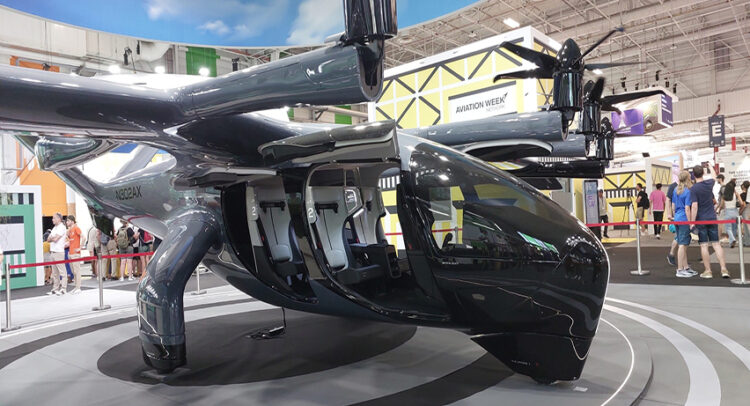
Archer Aviation (NYSE:ACHR) has generated plenty of headlines over the past couple of years as one of the leaders of the nascent eVTOL (electric vertical takeoff and landing) space. But as exciting as the vision sounds, there’s still a long checklist between concept and commercial reality, and that’s where Wall Street’s patience gets tested.
Claim 55% Off TipRanks
Forget margin or options. Here's how the pros trade ACHRJ.P. Morgan analyst Bill Peterson sees progress, but not without caveats. In his view, Archer’s story is less about flashy milestones and more about grinding through certification and infrastructure work. The company has been building toward that goal by securing strategically important assets and partnerships that could matter when real operations begin.
One move Peterson highlighted as particularly meaningful was Archer’s acquisition of the Hawthorne Airport facility in Los Angeles. The analyst described it as “an operational hub ahead of the 2028 Olympics and a test platform for next-generation aviation technologies.”
On the aircraft side, Archer has been steadily working through piloted test campaigns and preparing for full transition flights, moving from vertical lift to forward flight. Peterson noted that this phase is crucial because it shifts the story away from lab testing and toward real-world performance. As he put it, the FAA’s eVTOL Integration Pilot Program could become a “critical pathway for early commercial deployments,” giving regulators and manufacturers valuable operational data and a way to ease the public into this new form of travel.
That said, certification is slow, expensive, and unpredictable. While Archer has expressed confidence in its progress, the analyst expects commercialization to ramp gradually rather than suddenly. Peterson even warned that investors hoping for quick revenue inflection points may be disappointed, as entry into service could keep sliding to the right.
Spending is another reality check. Archer is still burning cash to support certification, manufacturing expansion, and go-to-market efforts. Peterson pointed out that the company will likely need to keep returning to capital markets to fund this buildout, especially given how capital-intensive aviation is. As he observed, Archer is “only beginning to generate cash in the mid-2030 period” under current assumptions – meaning dilution risk remains part of the equation.
Where Peterson does give Archer credit is its balance sheet and execution mindset. With substantial liquidity and a clear focus on manufacturing and regulatory progress, Archer is trying to de-risk the story step by step rather than betting everything on a single breakthrough moment. Still, uncertainty remains around defense demand and the pace of commercial adoption, which makes it difficult to assign full value to those opportunities today.
Taken together, that cautious balance leads Peterson to a Neutral rating on ACHR shares. His $8 price target implies the stock is likely to remain rangebound for now. (To watch Peterson’s track record, click here)
Not everyone on Wall Street shares that wait-and-see posture. Needham analyst Chris Pierce focuses on what he sees as the industry’s unresolved core question: “Can a company show that their aircraft can fly as intended, significantly de-risking the story”?
That question may start to get answered sooner rather than later. At the recent Needham Growth Conference, Pierce noted that CEO Adam Goldstein spoke confidently about achieving transition flight – where the aircraft shifts between vertical lift and wing-borne forward flight – in 2026.
Management, however, continues to stress that certification is a multiyear process and a “steep hurdle.” At the same time, Archer argues that its conservative aircraft design and industry-leading balance sheet support a stronger long-term position. In the near term, eIPP flight activity is positioned as a bridge to potentially stronger investor interest as Archer and its peers begin flying. Planned increases in flight test campaigns, including piloted VTOL transition flights this year, according to Pierce, are meant to shift the discussion away from “binary milestones toward sustained operational proof of concept,” improving visibility ahead of the 2028 Olympics, where Archer is slated to serve as the official air taxi provider.
Pierce also points to Archer’s financial flexibility as a differentiator. With “substantial balance sheet liquidity,” the company can fund in-house commercialization, advance its Georgia manufacturing ramp, and “pursue targeted tuck-in acquisitions across IP and composites, including defense-adjacent opportunities.” While the OEM model remains the primary value driver versus peers more exposed to longer-dated air taxi network operations, the analyst believes Archer’s approach across defense, civil aviation, public normalization, and disciplined certification is becoming “increasingly differentiated.”
“Net,” Pierce summed up, “while timelines remain long and patience is required, the setup continues to favor companies with capital and regulatory credibility, and ACHR continues to check those boxes.”
Pierce remains an Archer fan, maintaining a Buy rating on the shares alongside a $10 price target. This suggests the stock will gain ~24% in the months ahead. (To watch Pierce’s track record, click here)
All told, ACHR stock claims a Moderate Buy consensus rating, based on 4 Buys and 2 Holds. The forecast calls for 12-month returns of 53%, considering the average price target stands at $12.40. (See ACHR stock forecast)

Disclaimer: The opinions expressed in this article are solely those of the featured analysts. The content is intended to be used for informational purposes only. It is very important to do your own analysis before making any investment.