


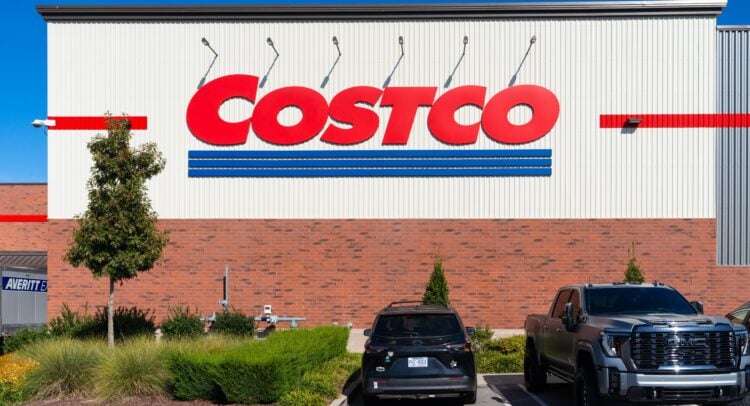
Costco Wholesale (COST) shares are down roughly 1% over the past 12 months, a clear underperformance relative to the S&P 500 (SPX), which has advanced nearly 17% over the same period. In my view, this divergence reflects sentiment rather than fundamentals and has created a compelling entry point for long-term investors.
Claim 30% Off TipRanks
- Unlock hedge fund-level data and powerful investing tools for smarter, sharper decisions
- Discover top-performing stock ideas and upgrade to a portfolio of market leaders with Smart Investor Picks

Costco’s underlying business remains exceptionally strong. Recent sales trends suggest momentum is re-accelerating, while traffic and renewal rates continue to validate the durability of its membership-driven model. That model not only supports consistent cash flow and pricing power, but also reinforces customer loyalty in an increasingly competitive retail environment.
Against a consumer backdrop that is uneven and, at times, fragile, Costco stands apart as one of the highest-quality retailers globally. Its scale, value proposition, and disciplined execution position the company to navigate macro uncertainty better than most peers. For these reasons, I remain constructive on Costco’s long-term outlook and bullish on the stock at current levels.
December Sales Point to Re-Acceleration
December sales results published last month indicate that Costco has started the new period on a solid footing and should help alleviate investor concerns that followed some softer trends earlier in the fall. U.S. comparable sales excluding gas rose 6.3% in December, an acceleration from November. On a two-year stacked basis, trends improved meaningfully to 14.6%, up from 11.6% in November and 12.5% in October. This re-acceleration suggests Costco is not losing relevance or pricing power, even as consumer spending patterns remain uneven.
Category performance in December was balanced and healthy. Food and sundries posted mid-single-digit growth, fresh foods delivered high-single-digit growth, and non-foods also grew at a mid-single-digit pace. Importantly, discretionary categories remained positive, reinforcing the view that Costco is gaining wallet share even outside essential spending. Ancillary businesses also grew at a mid-single-digit rate, contributing to overall momentum.

Net sales for December totaled $29.86 billion, up 8.5% year-over-year. Traffic increased 2.7% during the month, while average ticket rose 4.2%, both accelerating on two- and three-year stacked comparisons. These figures reinforce the narrative that Costco is attracting more visits while also capturing higher per-visit spend, a powerful combination in retail.
Membership Model Remains a Core Competitive Advantage
Costco’s membership engine remains one of the strongest and most durable profit drivers in retail. Membership fees account for more than 65% of net operating income, providing a recurring, high-margin revenue stream that supports pricing discipline and reinvestment in value.
In September 2024, it increased its membership fees, with Gold Star memberships rising from $60 to $65 and Executive memberships from $120 to $130. Despite the increase, renewal rates remain exceptional. In Q1, U.S. and Canada renewal rates stood at 92.2%, while global renewal rates reached 89.7%, highlighting the stickiness of Costco’s model.

While overall paid membership growth has decelerated modestly, management has successfully increased the share of higher-value Executive members. Executive memberships grew more than 9% since last year and now represent approximately 48% of total paid memberships, yet they account for roughly 74% of sales. Excluding the benefit of the fee increase, membership fee income still grew by more than 7%, reflecting robust underlying engagement.
Initiatives such as expanded Executive benefits, including earlier shopping hours and monthly Instacart credits, should continue to support trade-ups. While slower member growth may remain a near-term investor concern, the quality and profitability of the membership base remain extremely strong.
Long-Term Outlook Remains Compelling
Looking ahead, Costco’s long-term prospects remain highly attractive. Customers continue to gravitate toward the brand because of its unmatched combination of value, quality, and differentiated merchandising. Costco has some of the best global unit growth opportunities in retail, supported by ongoing U.S. and international store expansion, even as newer openings skew more toward infill locations.
Management’s disciplined approach, consistent reinvestment in value, and strong track record of shareholder returns reinforce confidence in sustainable top- and bottom-line growth. Even in a more competitive retail landscape, Costco’s scale, supplier relationships, and loyal membership base position it to continue taking share.
Valuation Remains Expensive for Good Reason
I estimated Costco’s fair value by averaging the results of 12 valuation methodologies, including P/E multiples, EV/EBIT multiples, and a five-year DCF with a revenue-exit assumption. This analysis yields a fair value of approximately $900 per share, implying slightly more than 1% downside from the current trading price. In aggregate, traditional valuation frameworks suggest that Costco is roughly fairly valued at present levels.
There is no dispute that Costco trades at a meaningful premium to peers. The stock currently trades at a P/E of 49.03x, compared to a sector median of 16x, and an EV/EBITDA (TTM) multiple of 30.27, versus a sector median of 10.89.

However, I believe this valuation premium is warranted. Costco’s superior growth visibility, resilient margin profile, and differentiated, membership-driven earnings model support sustained outperformance. Given the company’s quality, consistency, and durable competitive advantages, I expect the market to continue assigning Costco a premium multiple over the long term.
What is the Prediction for Costco Stock?
According to TipRanks, Costco carries a Moderate Buy consensus rating, based on 18 Buy, 4 Hold, and 1 Sell recommendations. Among the 23 Wall Street analysts providing 12-month price targets, the average target price is $1,052.38, which implies approximately 14% upside over the coming 12 months.

High-Quality Business Creates Compelling Bullish Opportunity
In summary, Costco’s recent sales trends indicate re-accelerating momentum, while its membership-based model continues to generate durable, high-quality profitability. The company’s value proposition remains especially relevant in today’s consumer environment, reinforcing customer loyalty and supporting long-term growth.
Although the stock is not inexpensive on traditional valuation metrics, I believe Costco’s exceptional business quality, competitive positioning, and long runway for growth justify a bullish outlook. At current levels, I view Costco as an attractive opportunity for long-term investors and remain confident in its ability to compound value over time.