


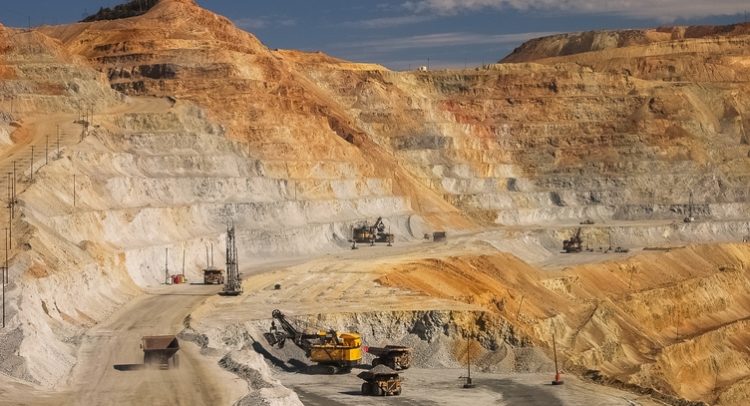
Tanzanian Royalty Exploration ((TSE:TRX)) has held its Q1 earnings call. Read on for the main highlights of the call.
Claim 55% Off TipRanks
- Unlock hedge fund-level data and powerful investing tools for smarter, sharper decisions
- Discover top-performing stock ideas and upgrade to a portfolio of market leaders with Smart Investor Picks
Tanzanian Royalty Exploration Earnings Call Signals Confident Growth Path Amid Manageable Risks
The tone of Tanzanian Royalty Exploration’s latest earnings call was clearly upbeat, dominated by record production, strong margins, and improving liquidity. Management underscored that the operation is now generating meaningful cash flow and can largely fund its own growth, even as they acknowledged execution, timing, and regulatory risks that could slow parts of the expansion. Overall, the call conveyed a positive outlook, with operational momentum and a clearer pathway to long-life production outweighing the known challenges.
Record Quarterly Production Underpins Growth Story
The company delivered a record quarter, producing just under 6,600 ounces of gold in Q1. This performance was driven by higher mill throughput, a solid mill feed grade of around 1.9 grams per tonne, better access to higher-grade ore following prior stripping, and improved recoveries of approximately 75%. Management said this puts them firmly on track to meet FY2026 production guidance of 25,000–30,000 ounces. The strong start gives investors confidence that the mine is moving out of ramp-up mode and into more stable, repeatable production.
Revenue, EBITDA and Margins Highlight High-Quality Earnings
Financially, Q1 was robust: revenue exceeded $25 million, while adjusted EBITDA came in above $13 million, both driven by record production and supportive gold prices. Gross profit margins above 50% highlight that this is a high-margin operation, not just a volume story. The combination of rising output and wide margins positions the company to generate substantial free cash flow, which management plans to reinvest into plant upgrades, exploration, and long-term infrastructure.
Strong Leverage to Rising Gold Prices
The company’s leverage to the gold price was a central theme. The realized gold price in Q1 was about $3,860 per ounce, and management noted that spot prices moved above $4,600 per ounce shortly thereafter. Because operating costs are relatively contained, each incremental move in the gold price translates into higher cash flow and improved project economics. Management framed this leverage as a key upside driver for shareholders if gold remains strong or moves higher.
Costs in Check and Competitive on the Curve
On the cost side, Q1 cash costs of roughly $1,500 per ounce landed right in the middle of the company’s guidance range of $1,400–$1,600 per ounce. Management emphasized that this places the operation in the lower quartile of the industry cash cost curve, meaning it can remain profitable even if gold prices soften. Holding this cost discipline as they scale up production is a crucial pillar of the investment case.
Balance Sheet and Liquidity Strengthen
Liquidity metrics improved meaningfully during the quarter. Working capital rose to around $15 million, with the working capital ratio improving to about 1.7x from 1.3x at the prior fiscal year-end, a roughly 31% increase. Cash on hand climbed to more than $9 million. Importantly, management stressed that free cash flow is already being directed toward funding plant expansion and upgrades, reducing reliance on external financing and strengthening the company’s ability to control its own growth pace.
Stockpile Build Enhances Operational Flexibility
The company continued to build its ROM (run-of-mine) pad stockpile, which now holds more than 22,000 ounces at an average grade of approximately 1.2–1.3 grams per tonne. This stockpile acts as a buffer, allowing the mine to smooth feed to the mill and optimize grade, even when mining patterns fluctuate. Management described the stockpile as an insurance policy that supports consistent throughput and stable production, which is particularly valuable as the operation undergoes upgrades and expansion.
Plant Upgrades Set Stage for Higher Recovery and Throughput
A major theme of the call was the ongoing upgrade of the 2,000 tonnes-per-day plant. Planned improvements span crushing, milling, CIL, and super-oxidation circuits. Metallurgical test work supports a shift to a larger SAG (semi-autogenous grinding) mill, which would simplify the flow sheet while enabling higher throughput. Fine grind optimization to around 20 microns is expected to deliver energy and capital efficiencies, while additional recovery gains are anticipated from enhanced oxidation and oxygenation systems. SAG mill lead times of 7–9 months add some timing risk, but management sees these upgrades as core to driving higher recoveries and production volumes in the medium term.
Exploration Program Targets Resource Growth
On the resource front, the company highlighted an existing measured and indicated resource of about 1.5 million ounces at an average grade of roughly 2.5 grams per tonne. Recent geophysics have opened up new targets beyond the core Anfield and Stamford Bridge areas, creating additional exploration upside. Management outlined plans for roughly 40,000 meters of drilling in FY2026, with the potential to grow that program to 50,000–60,000 meters. The exploration budget is set at $3–$5 million, with the clear aim of expanding resources, extending mine life, and potentially supporting future production increases.
Long-Term Tailings and Infrastructure Strategy
Tanzanian Royalty Exploration is also investing in long-term infrastructure, particularly around tailings storage. The company is committed to building TSF3 to a life-of-mine design, with construction planned as a single roughly five-month campaign. TSF3 is expected to be available around Q1–Q2 FY2027, with an interim lift on the existing TSF2 facility to ensure continued capacity. This approach is intended to de-risk the operation from a tailings perspective and align storage capacity with the long-life mine plan.
Self-Funded Path Toward Underground Development
Management reiterated a clear, staged plan to move into underground mining while keeping the balance sheet intact. The strategy is to first use plant expansion and efficiency gains to increase production and cash flow from the open pit. These stronger cash flows would then fund underground development, supporting an overall mine life of around 18 years on a preliminary economic assessment basis, including roughly 15 years of underground operations. If executed as planned, this self-funded pathway could support sustained production and value creation without heavy dilution.
Regulatory and Political Timing Risks Remain
Not everything is under management’s control. Negotiations with the Tanzanian government regarding a broader operating framework and state participation are ongoing but slower than management and investors would like. The broader political environment and post-election dynamics in the country create timing and regulatory risks that could affect agreements and approvals. While no specific negative developments were flagged, the company acknowledged that sovereign processes may delay certain decisions and remain an overhang for the investment case.
Deferred Upside from Key Process Upgrades
Some of the most impactful plant improvements will not translate into operational benefits until FY2027. Upgrades including reactors, oxygen systems, ADR, elution, and gold room enhancements are under construction but will take time to complete and integrate. As a result, meaningful gains to recoveries and throughput from these initiatives are expected to show up later in the mine plan rather than immediately. Investors will need patience to see the full effect of the capital now being deployed.
Equipment Lead Times and Execution Bottlenecks
The expansion remains exposed to supply-chain realities, particularly around long-lead items like the SAG mill. With estimated lead times of 7–9 months, the timeline for higher throughput depends on timely procurement and delivery. Management also flagged the usual ramp-up and integration challenges that accompany new equipment and process changes. These factors introduce execution risk and could drive short-term volatility in production or costs during the transition period.
Capex Timing and Financial Flexibility
Capital spending for the current year is guided at $15–$20 million, but the exact timing of that outlay is flexible and will depend on free cash flow generation and gold price trends. While this approach preserves financial flexibility and reduces the need for external funding, it also means the expansion schedule may shift. The company is effectively pacing growth to its cash generation, which can be prudent but may extend timelines if gold prices or operating performance soften.
Warrant Overhang and Share Register Dynamics
The company highlighted a significant warrant overhang, with a tranche around $0.80 nearing expiry and another at $0.44 further out. These instruments can create selling pressure as they are exercised or as holders trade ahead of expiry, potentially weighing on the share price even as fundamentals improve. Management’s strategy is to manage this overhang over time, but investors should be aware that equity-market dynamics may not fully reflect operational progress in the short term.
High Strip Ratio and Grade Variability Considerations
Finally, management drew attention to the operation’s higher life-of-mine strip ratio. While this is typical for certain deposits, it implies higher waste mining volumes and can increase capital and timing requirements for open-pit phases. Periods of intensive stripping are necessary to access higher-grade ore, which in turn can create short-term variability in grades and production. The company’s growing stockpile and careful mine planning are designed to mitigate these fluctuations, but they remain part of the operational reality.
Forward-Looking Guidance and Expansion Roadmap
Looking ahead, management reaffirmed FY2026 production guidance of 25,000–30,000 ounces at cash costs of $1,400–$1,600 per ounce. Q1’s performance—about 6,600 ounces produced at roughly $1,500 per ounce cash cost, generating over $25 million in revenue and more than $13 million in adjusted EBITDA—was presented as a strong validation of this outlook. Capital spending is forecast at $15–$20 million, with a $3–$5 million exploration budget supporting 40,000–60,000 meters of drilling. The company aims to maintain a 2,000 tpd processing base with upgrades that are expected to push performance beyond the levels assumed in the existing economic study. Near-term milestones include a pre-leach thickener targeted by April, which could lift mill head grade by about 5%, and key processing and oxygenation works targeted by year-end that are expected to drive benefits from FY2027 onward. Tailings capacity is set to be secured through TSF3, planned for completion around Q1–Q2 FY2027, underpinning an approximate 18-year mine life.
In summary, Tanzanian Royalty Exploration’s earnings call painted the picture of an emerging, cash-generative gold producer with a long-life asset, improving balance sheet, and a detailed expansion and exploration plan. While regulatory negotiations, equipment lead times, and timing uncertainties around capital projects and warrant overhangs present real risks, management’s emphasis on self-funded growth, strong margins, and substantial exploration upside suggests a compelling medium- to long-term story for investors willing to tolerate near-term volatility and execution risk.