


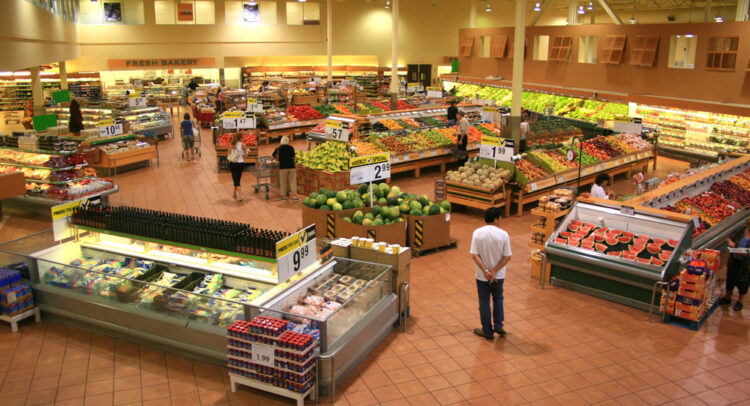
Pricesmart ((PSMT)) has held its Q1 earnings call. Read on for the main highlights of the call.
Claim 55% Off TipRanks
- Unlock hedge fund-level data and powerful investing tools for smarter, sharper decisions
- Discover top-performing stock ideas and upgrade to a portfolio of market leaders with Smart Investor Picks
PriceSmart’s Earnings Call Highlights Growth Momentum Amid Manageable Headwinds
PriceSmart’s latest earnings call painted a predominantly upbeat picture, with management emphasizing strong sales growth, resilient margins and expanding membership, alongside rapid progress in digital and supply-chain initiatives. While the quarter was not without challenges –including holiday-period disruptions, foreign-exchange losses, higher SG&A, and a slightly higher tax rate– executives framed these as largely transitory or investment-driven. Overall, the message to investors was that the core business is healthy, demand is strong across regions and categories, and the company is leaning into growth through new clubs, technology, and logistics capabilities.
Broad-Based Top-Line Acceleration
Net merchandise sales and total revenue reached nearly $1.4 billion, with net merchandise sales up 10.6% year-over-year, or 9.5% in constant currency. Comparable net merchandise sales rose 8.0% (6.9% in constant currency), underscoring that growth is not just driven by new clubs but also by increasing productivity at existing locations. This combination of strong headline growth and solid comps signals healthy demand across PriceSmart’s footprint and suggests the company continues to gain share in its core markets.
Healthier Transaction Metrics and Basket Dynamics
Underlying transaction dynamics improved meaningfully. The average ticket increased 2.1%, driven by a 1.8% rise in average price per item, while transactions grew a robust 8.4% year-over-year. Items per basket were essentially flat, indicating that growth is being supported by more member visits and modest pricing rather than heavy basket inflation or a push into significantly larger orders. For investors, this points to a stable, volume-led growth pattern rather than an overreliance on pricing.
Colombia Emerges as a Standout Growth Engine
Colombia was the clear regional outperformer. Net merchandise sales in the country surged 27.8% year-over-year (15.0% in constant currency), with comparable net merchandise sales up 27.9% (14.7% in constant currency). Management highlighted that Colombia alone contributed roughly 320 basis points to overall consolidated comparable sales growth, reinforcing the country’s status as a key strategic market. The strength in Colombia supports the case for further investment there, given the outsized impact on consolidated results.
Solid Performance Across Central America and the Caribbean
Beyond Colombia, PriceSmart reported steady momentum in Central America and the Caribbean. Central America delivered net merchandise sales growth of 9.6% (9.2% in constant currency) and comparable growth of 5.4% (5.1% in constant currency), adding about 320 basis points to consolidated comps. The Caribbean region posted net merchandise sales growth of 5.7% (7.8% in constant currency) with comps up 5.6% (7.7% in constant currency), contributing around 160 basis points. These results show that growth is broad-based, not overly concentrated in a single region.
Diversified Category Strength Supports Growth
Growth was well-distributed across product categories. Food sales rose about 11.3%, non-foods climbed 7.2%, food service and bakery grew around 10.1%, and health services (including optical, audiology, and pharmacy) jumped 17.8%. The especially strong performance in health services underscores PriceSmart’s edge as a one-stop value proposition for members. This balanced category mix reduces reliance on any single segment and helps smooth out volatility.
Membership Expansion and Premium Tier Monetization
Membership remains a key strategic asset. Total membership accounts grew 6.7% year-over-year to more than 2 million, with a 12-month renewal rate of 89.3%—a very high retention level for a membership-based retailer. The premium Platinum tier is gaining traction, rising to 19.3% of the member base from 14% a year ago. Membership income as a percentage of revenue edged up to 1.7% from 1.6%. Together, this indicates PriceSmart is not only growing its member base but also successfully upselling to higher-value tiers, improving the quality and profitability of its membership revenue.
Digital Channel Momentum Gains Pace
The digital business is quickly becoming a meaningful growth driver. Digital channel sales reached $89.8 million, up 29.4% year-over-year, representing 6.6% of net merchandise sales. Website and app orders grew 18.1%, and average transaction value increased 10.1%. Around 73% of members now have an online profile and 27.1% have made at least one online purchase. This indicates that PriceSmart’s omni-channel strategy is resonating, and it provides a platform for further share gains as digital penetration continues to rise.
Supply Chain and Distribution Network Upgrades
Management detailed an ambitious logistics build-out aimed at improving product availability and lowering landed costs. The Panama facility has been adapted for cold merchandise, and a new distribution center has begun operating in Guatemala. Plans are in place to open additional distribution centers in Trinidad, Colombia and the Dominican Republic. The company is also consolidating with a third-party provider in China and rolling out RELEX and e2open systems to enhance forecasting, inventory, and trade management. These moves should translate into more efficient operations, better in-stock positions, and improved margins over time.
Profitability and Margin Resilience
Despite heavy investment and some external pressures, profitability improved. Operating income increased 8% to $62.9 million, net income rose to $40.2 million (or $1.29 per diluted share) from $37.4 million ($1.21), and adjusted EBITDA climbed 9.8% to $86.9 million. Gross margin on net merchandise sales held steady at 15.9%, while total revenue margin improved by 30 basis points to 17.7%. These results show that PriceSmart is managing costs and pricing effectively, maintaining margin discipline even as it invests aggressively in growth.
Strong Cash Generation and Liquidity
PriceSmart ended the quarter with $249.6 million in cash and cash equivalents plus about $114.2 million in short-term investments, providing a solid liquidity cushion. Net cash provided by operating activities was $71.2 million, up $32.7 million from the prior year. This cash generation supports the company’s expanding capex program, including new clubs and supply-chain upgrades, without overly straining the balance sheet.
Real Estate Pipeline and Market Expansion
The company is building a robust pipeline of new clubs. Land has been purchased for locations in La Romana (Dominican Republic), Montego Bay and South Camp Road (Jamaica), and Ciudad Quesada (Costa Rica). Management plans to open four new clubs in fiscal 2026, bringing the total to about 60 clubs. PriceSmart is also progressing toward entry into Chile, with two prospective sites identified and a country general manager hired. These moves reinforce the long-term growth runway as the club footprint expands across Latin America and the Caribbean.
Technology and Operational Modernization
Operational efficiency is being enhanced through several technology projects. The company completed the roll-out of its ELERA point-of-sale system in the English-speaking Caribbean, is migrating its mobile app to native iOS and Android platforms, and is initiating the implementation of Workday HCM. These upgrades are designed to streamline operations, improve the member and employee experience, and support the growth of digital and omni-channel services.
Holiday Season Disruptions and December Softness
Despite a solid quarter overall, PriceSmart faced a noticeable deceleration during the key holiday period. For the nine-week span ending December 28, comparable net merchandise sales grew 7.1% in U.S. dollars (5.4% in constant currency), slower than the quarter’s pace. December was hit by election-related uncertainty in Honduras, an extended rainy season in Panama that affected traffic and logistics, and supply chain timing issues that led to out-of-stocks in certain high-volume food items. Management characterized these factors as temporary, but they illustrate the operational sensitivity to local events and weather.
Foreign Exchange and Other Expense Pressures
Foreign currency volatility continues to weigh on results below the operating line. The company recorded a net loss of $7.2 million in total other expense, primarily due to foreign currency-related losses, broadly in line with last year’s $7.3 million. These FX-related items remain a structural headwind for a company operating in multiple emerging markets and are a factor investors will continue to monitor.
SG&A and Tax Headwinds Tied to Investment
Total SG&A expenses rose to 13.1% of total revenues from 12.8%, a 30-basis-point increase, driven mainly by continued technology investments and CEO compensation adjustments. The effective tax rate climbed to 27.9% from 26.5%, influenced by nonrecurring items such as tax contingency approvals and foreign-exchange fluctuations. While these factors dampened the bottom line, management framed them as either temporary or linked to strategic investments intended to support future growth.
Clarification on Private Label Penetration
Private label remains an important profitability lever, but reported figures were affected by a classification change. Private label sales accounted for 27% of total merchandise sales, down 70 basis points year-over-year. However, management explained that this decline stemmed from a reclassification of the produce category; on a like-for-like basis, private label penetration actually would have increased by about 70 basis points. This suggests the underlying trend in private label adoption is positive, which should be supportive of margins over time.
Elevated Investment Cash Outflows
Reflecting the company’s growth agenda, net cash used in investing activities increased by $61 million year-over-year. The rise was driven by higher purchases of short- and long-term investments and a $10.4 million increase in spending on property and equipment, primarily to support real estate expansion. For shareholders, this signals a deliberate choice to reinvest cash flows into building future capacity and market presence.
Local Currency Liquidity Constraints in Trinidad
PriceSmart highlighted a specific liquidity challenge in Trinidad, where about $80.2 million of cash, cash equivalents and short-term investments is denominated in local currency and not readily convertible into U.S. dollars. This reflects local foreign-exchange availability constraints and normal cash fluctuations. While not an immediate operational problem, this type of structural FX control risk is a reminder of the complexities of operating in certain Caribbean markets.
Weather and Natural-Disaster Effects on Operations
Weather and natural events also affected operations during the quarter. Hurricane Melissa caused disruptions in Jamaica, leading to adjustments to club opening timelines there, though management does not foresee additional delays at this stage. The unusually rainy season in Panama further pressured traffic and logistics. These events highlight operational risk from climate and weather patterns, which can temporarily impact performance even in fundamentally strong markets.
Monitoring Geopolitical and Macro Risks
Management indicated it is closely watching macro and geopolitical factors in the region, including changes in remittance flows and developments in Venezuela. While no tangible impact has been observed yet, these issues are viewed as potential downside risks that could affect consumer spending or regional stability. For now, they remain on the watch list rather than the income statement, but investors should be aware of the broader risk backdrop.
Forward-Looking Plans and Fiscal 2026 Roadmap
Looking ahead to fiscal 2026, PriceSmart’s guidance centers on execution of its technology and infrastructure roadmap rather than precise earnings targets. The company expects to complete its RELEX forecasting and replenishment implementation, advance e2open deployments, and open new distribution centers in Trinidad, Colombia and the Dominican Republic. It plans to continue rolling out upgrades to point-of-sale systems, Workday and a fully native mobile app experience. On the real estate front, four new clubs are scheduled to open in fiscal 2026—La Romana (Dominican Republic), Montego Bay and South Camp Road (Jamaica), and Ciudad Quesada (Costa Rica)—bringing the total club count to around 60. Management framed these initiatives, along with current metrics like double-digit merchandise sales growth, high membership renewal, rising digital penetration, and stable margins, as key drivers to improve product availability, reduce lead times and lower landed costs in the coming years.
In sum, PriceSmart’s earnings call underscored a business that is growing solidly, investing heavily in its future, and managing through localized disruptions and currency noise. Strong sales across regions and categories, robust membership trends, and rising digital engagement provide a compelling growth narrative, while margin stability and solid cash generation support the investment cycle. Risks around FX, weather, and regional macro conditions remain, but for now they appear manageable. For investors, the story is one of disciplined expansion and operational upgrading, positioning PriceSmart for continued growth across Latin America and the Caribbean.