


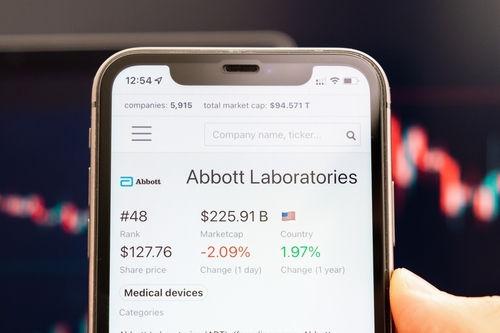
Abbott Laboratories ((ABT)) has held its Q4 earnings call. Read on for the main highlights of the call.
Claim 30% Off TipRanks
- Unlock hedge fund-level data and powerful investing tools for smarter, sharper decisions
- Discover top-performing stock ideas and upgrade to a portfolio of market leaders with Smart Investor Picks
Abbott Laboratories Leans on Devices and Diagnostics to Power Through Nutrition Weakness
Abbott Laboratories’ latest earnings call conveyed a broadly constructive tone, with management underscoring double‑digit adjusted EPS growth, expanding margins, and sustained momentum in medical devices and continuous glucose monitoring, even as they acknowledged real near‑term pressure in the Nutrition business and lingering headwinds from COVID testing and China. Executives framed 2026 as another year of solid, high‑single‑digit organic growth and roughly 10% EPS expansion, leaning on a strong pipeline, recent regulatory wins, and the planned acquisition of Exact Sciences to offset softer trends in certain legacy areas.
Strong EPS Performance and Margin Expansion
Abbott delivered adjusted EPS of $1.50 in the quarter, up 12% year over year, and guided 2026 adjusted EPS to a range of $5.55–$5.80, implying about 10% growth at the midpoint. Profitability was a clear bright spot: adjusted gross margin reached 57.1% of sales, up roughly 20 basis points, while adjusted operating margin climbed to 25.8%, a gain of about 150 basis points. Management highlighted disciplined cost control and mix shift toward higher‑margin businesses as key drivers, signaling confidence that margin expansion remains a multi‑year theme despite input‑cost inflation and geographic pressures.
Solid Top-Line Momentum and 2026 Sales Outlook
On the top line, underlying growth is steady rather than spectacular. Q4 organic sales excluding COVID testing grew 3.8% year over year, while 2026 organic sales are guided to 6.5%–7.5%, or about 7% at the midpoint. Management expects foreign exchange to be a modest tailwind, adding roughly 1% to reported sales for the year and about 3% in the first quarter. The 2026 sales outlook sits slightly below prior Street expectations, with executives attributing the modest shortfall primarily to a tougher near‑term view on Nutrition rather than any broad deterioration in the overall portfolio.
Medical Devices and Emerging Markets Drive Growth
Medical Devices remained a key growth engine, with sales up 10.5% in the quarter. Abbott’s Established Pharmaceuticals Division (EPD), which focuses on branded generics in emerging markets, increased sales by 7%, marking its fifth consecutive year of growth above that level—evidence of durable demand and strong execution in these geographies. Within devices, Rhythm Management posted 12% growth in Q4 and 10% for the full year, while the Vascular business grew 6.5% in the quarter and 5% for the year. Management positioned these businesses as foundational contributors to Abbott’s long‑term growth algorithm.
CGM Business Scales Past $7.5 Billion
Abbott’s continuous glucose monitoring (CGM) franchise remains one of the company’s standout growth stories. CGM sales rose 12% in the quarter and 17% for the full year, with 2025 CGM revenue expected to surpass $7.5 billion. Management emphasized that CGM has added roughly $1 billion in annual incremental revenue for multiple consecutive years and continues to benefit from expanding penetration and new product opportunities. Looking ahead, the company forecasts continued low‑teens percentage growth in CGM next year, reinforcing its role as a core long‑term growth pillar.
Diagnostics: Core Lab and Point-of-Care Build Momentum
Diagnostics overall increased 3.5% in the quarter, with results dampened by the anticipated decline in COVID testing revenue. Beneath that headline, the underlying businesses showed healthier trends. Core Lab Diagnostics grew 3.5% in Q4 and 7% for the full year when excluding China, with management calling out accelerating momentum in markets outside that country. Point‑of‑care diagnostics grew 7% in the quarter, helped by rising adoption of high‑sensitivity troponin tests. These trends suggest that, as COVID testing continues to fade, Abbott’s more durable diagnostic platforms are increasingly driving the segment’s performance.
Pipeline and Product Milestones Underpin Future Growth
Abbott highlighted a broad slate of regulatory and clinical milestones expected to sustain its growth trajectory. The company has approvals and launches underway for its Volt and Tactiflex Duo pulsed‑field ablation products and a new indication for its Navitor TAVR device, while U.S. coverage decisions are supporting growth for structural heart technologies such as Triclip and CardioMEMS. Abbott completed enrollment in its pivotal CATALYST left atrial appendage trial, filed for FDA approval of a dual glucose‑ketone sensor, and initiated a pivotal coronary intravascular lithotripsy trial. In parallel, the company is preparing biosimilar launches and plans to introduce at least eight new nutrition products over the next 12 months, signaling an active innovation pipeline across multiple franchises.
Strategic Acquisition to Enter Cancer Diagnostics
In a major strategic move, Abbott announced a deal to acquire Exact Sciences, giving it a direct entry into cancer diagnostics. Management expects this transaction to add a business with more than $3 billion in annual revenue, growing at an attractive mid‑teens rate, effectively creating a new high‑growth vertical within Abbott’s portfolio. The company framed the acquisition as a way to leverage its global scale, diagnostic expertise, and commercial infrastructure to accelerate growth in cancer screening and diagnostics, further diversifying Abbott’s revenue base beyond its traditional areas of strength.
Delivering on Targets Despite External Headwinds
Executives repeatedly underscored the company’s ability to hit its original goal of double‑digit EPS growth in 2025 and deliver top‑tier margin expansion despite a challenging macro backdrop. Abbott has had to contend with new tariffs, the ongoing decline in COVID testing volumes, and heightened pressures in China, yet still managed to expand margins and grow earnings. Management pointed to operational discipline, cost efficiencies, and business mix as key levers, portraying these results as proof that Abbott can execute through cycles and external shocks.
Nutrition Segment Struggles With Sales Decline
The Nutrition business was a clear weak spot in the quarter, with sales declining. Management cited lost market share in U.S. pediatric nutrition, including the impact of losing a large WIC contract, as well as constrained volume growth after several years of price hikes aimed at offsetting higher manufacturing and commodity costs. Abbott expects the Nutrition segment to remain under pressure in the first half of 2026, with improvement and a return to growth targeted for the second half as remediation efforts gain traction and new products roll out.
Price Hikes Dampen Demand in Nutrition
Higher manufacturing costs pushed Abbott to raise prices in Nutrition, but those increases have now caught up with demand. Management acknowledged that higher shelf prices are suppressing consumer volumes and limiting growth in the category. In response, the company rolled out price and promotional actions in the fourth quarter to re‑ignite volume, accepting some near‑term margin trade‑offs to rebuild a healthier, volume‑driven growth profile. This reset is central to the company’s plan to stabilize Nutrition and re‑establish it as a contributor to overall growth.
China and VBP Still Cloud Diagnostics Outlook
While Diagnostics is showing healthier trends outside China, management was candid about the ongoing challenges in that market. Volume‑based procurement (VBP) and related pricing dynamics have weighed on results in prior periods and continue to represent a significant area of uncertainty. Abbott emphasized that Core Lab growth is accelerating when China is excluded, but investors were reminded that China‑related headwinds remain a structural overhang that could periodically pressure diagnostic performance and pricing.
COVID Testing Revenue Continues to Fade
The continued normalization of COVID testing remains a drag on Abbott’s reported diagnostics growth. Management noted that COVID testing revenue will be smaller again in 2025 and is expected to be roughly $200 million in 2026, a fraction of peak pandemic levels. While this decline creates a year‑over‑year headwind, executives stressed that the company has successfully pivoted back toward its core, recurring diagnostic platforms and that COVID testing will become progressively less relevant to the overall financial picture.
Lowered Top-Line Versus Prior Consensus Tied to Nutrition
Abbott’s 2026 organic sales guidance midpoint of approximately 7% sits modestly below a prior consensus near 7.5%, and management directly linked this gap to a more cautious near‑term view on the Nutrition segment. The company framed the adjustment as a prudent reflection of current market share and demand dynamics rather than a broad deceleration across the portfolio. Growth in devices, diagnostics, and CGM is expected to offset much of the nutrition softness, leaving the overall growth profile broadly consistent with Abbott’s longer‑term targets.
Forward Guidance Signals Steady Growth with FX Tailwind
Looking ahead, Abbott guided 2026 adjusted EPS to $5.55–$5.80, implying around 10% growth at the midpoint, alongside 6.5%–7.5% organic sales growth and a modest FX tailwind of about 1% to reported sales for the year (approximately 3% in the first quarter). First‑quarter adjusted EPS is projected at $1.12–$1.18, and the company expects an adjusted tax rate of 15%–16%. Management also flagged an ongoing headwind from COVID testing, estimated at roughly $200 million in 2026, but framed this as manageable given the strength in devices, CGM, and core diagnostics. Overall, the guidance portrays a company expecting steady, high‑single‑digit top‑line growth and sustained EPS expansion, supported by margin discipline and a pipeline of new products.
In sum, Abbott’s earnings call painted a picture of a diversified healthcare company leaning on its strengths in medical devices, diagnostics, and CGM to offset temporary weakness in Nutrition and external pressures in China and COVID testing. While near‑term growth expectations for Nutrition have been reset, management’s focus on pricing actions, innovation, and strategic M&A—particularly the move into cancer diagnostics—supports a constructive medium‑term outlook. For investors, the story remains one of solid earnings growth, expanding margins, and a broadening portfolio of high‑growth franchises.