


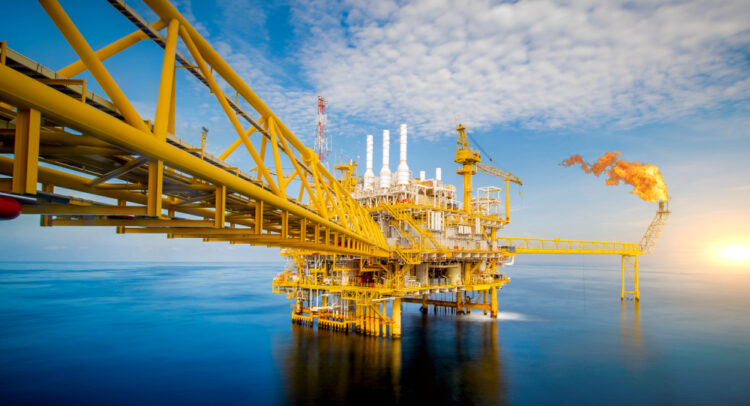
Middle Eastern national oil companies intensified their role as a key stabilizing anchor in the global energy system in 2025, doubling down on hydrocarbons while aiming to lower production costs and emissions. More than $100 billion in upstream spending helped expand crude spare capacity and speed up gas development, reinforcing the region’s ability to respond to supply disruptions and price volatility in both Oil – Brent Crude, Oil – US Crude, and regional gas markets such as Natural Gas. Against a backdrop of geopolitical fragmentation and uneven energy-transition policies, this strategy underscores a pragmatic focus on energy security and market share, positioning Middle Eastern producers as pivotal swing suppliers through 2026.
Claim 30% Off TipRanks
- Unlock hedge fund-level data and powerful investing tools for smarter, sharper decisions
- Discover top-performing stock ideas and upgrade to a portfolio of market leaders with Smart Investor Picks
Over the past month, prices have softened across the complex, with Oil – US Crude down about 4.14% and Oil – Brent Crude lower by roughly 3.44%, reflecting concerns over demand resilience and ample supply as spare capacity rises. Natural Gas has seen a steeper retreat, dropping around 20.56% in the same period, highlighting how increased development and mild demand expectations can pressure prices. Daily technical indicators currently point to downside risk across these benchmarks, with Oil – US Crude flashing a 1-day Sell signal, Oil – Brent Crude also registering a 1-day Sell signal, and Natural Gas likewise showing a 1-day Sell signal, suggesting that near-term momentum remains bearish even as the region’s strategic investments seek to underpin longer-term market stability. Investors can explore more updates, prices, and analysis across global markets at Commodities.