AI capabilities are improving at a rapid pace, according to new research from the UK AI Security Institute. The data show that AI performance on certain technical tasks is doubling every eight months, which is much faster than safety systems are being built or tested.
Claim 30% Off TipRanks
New trading tool for AMZN bullsAs a result, experts warn that governments and companies may struggle to keep control as AI systems take on more complex roles. David Dalrymple, a program director at the UK Advanced Research and Invention Agency, said society may not have enough time to prepare strong safeguards before AI is widely used in critical systems.
Notably, recent testing shows AI models can now complete apprentice-level cybersecurity work about 50% of the time. That is a sharp increase from under 9% in late 2023. In addition, researchers tested the first AI system capable of completing expert-level cyber tasks that typically take humans more than 10 years to master.
Economic Pressure Could Speed Up Deployment
At the same time, economic incentives may push companies to release advanced AI systems before safety controls are fully ready. Dalrymple expects that within five years, machines could perform the most valuable work faster and cheaper than humans.
Looking ahead, he believes that by late 2026, AI systems may automate a full day of research and development work. As a result, AI could begin improving itself at a pace regulators cannot easily follow. This creates a feedback loop where progress accelerates while oversight struggles to keep up.
Meanwhile, the UK AI Security Institute also tested how well AI systems could copy themselves. Success rates rose from under 5% to more than 60% over two years. While these systems are still unlikely to succeed in real-world settings, the improvement in speed has raised concern among researchers.
Overall, the report notes that safety tools are improving, but every AI model tested still showed weaknesses. Although some defenses now take longer to break, no system proved fully secure.
For investors, the message is clear. AI is becoming more powerful at a faster pace than controls are being built. Therefore, the main risk is not just technological, but also economic, as competition and cost pressure may push adoption faster than safety planning can realistically support.
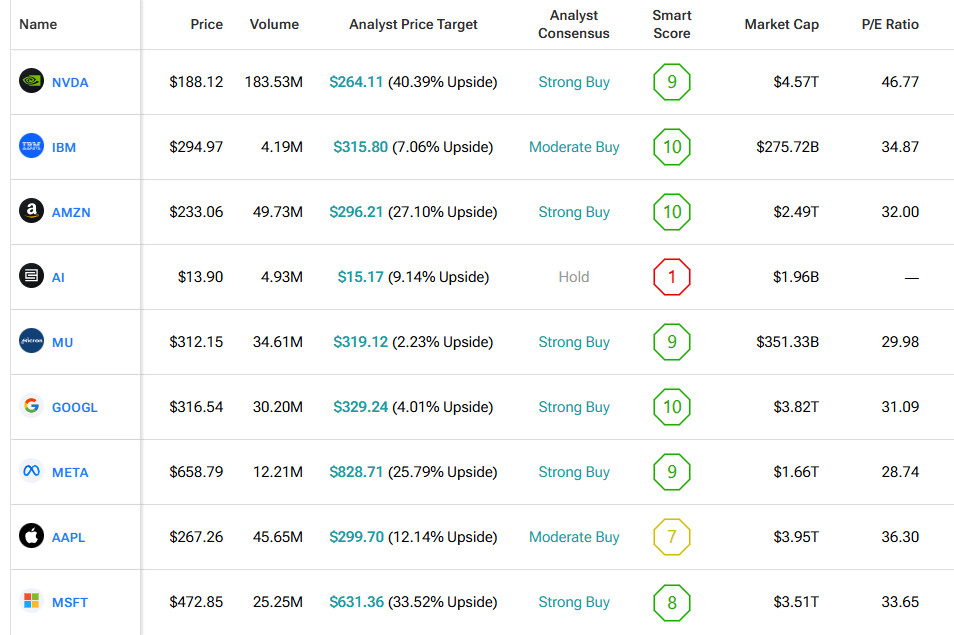
We used TipRanks’ Comparison Tool to identify the notable publicly traded companies that are investing heavily in the AI revolution. In the list, you’ll find major companies such as Nvidia (NVDA), Alphabet (GOOGL), and Amazon (AMZN).